Table of contents
- Key takeaways
- What Ohio rules require performance bonds on public works?
- How much will the performance bond premium actually cost a contractor in Ohio?
- Do consultants bidding Ohio public works have to post a performance bond?
- How do sureties underwrite and set the premium — what can you do to lower cost?
- How to buy, file and certify a performance bond for an Ohio public‑works job?
- Comparison: bid bond vs performance bond vs payment bond
- Common mistakes contractors and consultants make when bonding a public project (and how to avoid them)
- Decision checklist before you bid an Ohio public‑works job
- Frequently asked questions
- Bottom line
Ohio law usually requires a performance bond equal to 100% of the contract amount on state public-works contracts; the premium you pay to a surety is a small percentage of that bond amount and depends mainly on your credit, financials and experience. This article explains the exact Ohio rules that apply to public works, typical premium ranges found in the market, when consultants (not general contractors) must post bonds in Ohio, and the step‑by‑step paperwork and questions to ask your agent.

Key takeaways
- Ohio state public-works contracts commonly require performance and payment bonds at 100% of the contract amount. (codes.ohio.gov)
- The surety premium (what you pay) is a percentage of the bond — for contract bonds many sources report typical ranges around 0.5%–3% for well-qualified contractors, with higher rates for weaker credit. (moneygeek.com)
- The SBA charges a separate 0.6% guarantee fee on SBA‑backed payment/performance bonds; that is added to the surety premium if you use the SBA program. (sba.gov)
- Consultants who supply professional services (design, engineering, planning) are usually not treated like prime contractors, but if your contract is a construction or public‑improvement contract you may still need a bond — check the solicitation and Ohio rules. (codes.ohio.gov)
- Get your financials and credit in order, talk to a surety agent early, and add the premium (not the full bond amount) into your bid pricing.
What Ohio rules require performance bonds on public works?
Ohio statute and state contracting rules set the basic bond obligations for state public‑works projects. For Department of Transportation contracts the director must require a contract performance bond and a payment bond each equal to 100% of the contract amount. Those requirements are in Ohio Revised Code §5525.16 (effective language updated as of June 2025).
For other state public‑improvement contracts administered under Chapter 153, contracting authorities must follow the public‑improvement procedures in that chapter — which include standard bonding and procurement rules for projects above the statutory thresholds for state projects. The Ohio Facilities Construction Commission (OFCC) publishes bond forms and bond instructions used on state projects.
Local governments (counties, cities, school districts) often follow similar “Little Miller Act” approaches but can set their own thresholds, waivers or pre‑qualification rules. Check the solicitation and the local procurement code (for example, Cuyahoga County posts its bond/insurance thresholds publicly). (cuyahogacounty.gov)
How much will the performance bond premium actually cost a contractor in Ohio?
Short answer: you pay a premium — a small percentage of the full bond amount — not the bond’s full face value. The premium varies by your company’s credit and history, but reputable market guides and consumer publishers report typical contract‑bond premium ranges roughly between 0.5% and 3% for qualified contractors; rates rise if your credit or financials are weaker. Use these market figures when budgeting and pricing your bid.
Important cost factors to expect:
- Contractor financials and credit score — stronger credit and positive financial statements produce the best rates.
- Contract size and duration — many sureties use tiered rate schedules where the first portion of the bond is priced at a higher per‑thousand rate, then declines for larger bands.
- Project complexity and subcontractor risk — contracts with unusual risk or long warranty obligations can attract higher premiums.
- Use of the SBA Surety Bond Guarantee program — if you need an SBA‑guaranteed bond, add the SBA’s 0.6% guarantee fee to the surety premium.
A worked hypothetical (using sourced ranges): if a surety quotes 2% on a $500,000 public‑works contract, the premium would be $10,000; if you use the SBA guarantee add 0.6% ($3,000) for a total paid of $13,000. The 2% figure above is illustrative only — it comes from published market ranges used by industry guides. Always get an actual quote from an authorized surety or agent.
Do consultants bidding Ohio public works have to post a performance bond?
It depends on the contract type and the solicitation language. If your role on the project is pure consulting (design, environmental review, program management) and the contract is a professional services agreement, many state solicitations require professional liability, not performance/payment bonds. But when a consultant is acting as or subcontracting work that falls under “public improvement” (construction, repair, physical work), Ohio law and agency rules can require contract bonds — often the same 100% bonds for contractors under Chapter 153 or ORC §5525.16. Always read the solicitation and the “bonding” or “insurance” sections carefully.
If you’re a consultant bidding work that the owner classifies as construction or public improvement, see our related posts on Ohio contracting and bonds: Do consultants bidding Ohio public works need payment bond and What insurance Ohio requires for state consultant contracts. For registration and vendor rules see How to register as Ohio vendor consultant bids. (ofcc.ohio.gov)
How do sureties underwrite and set the premium — what can you do to lower cost?
Surety underwriting resembles commercial lending: they want to see capacity (work‑in‑progress, backlog), capital (balance sheet strength), and character (credit record, references). Key underwriting inputs are personal and business credit scores, audited or CPA‑prepared financial statements, your work history on similar contracts, and any prior claims or defaults. Strong documentation typically produces the lowest quoted rates.
Practical steps to improve terms:
- Clean and document your financials: CPA‑prepared P&L and balance sheet, accounts receivable schedules and a current backlog/WIP schedule.
- Improve personal/business credit where possible; many sureties use personal guarantees on small firms.
- Start with smaller, lower‑risk public jobs to build a bond record before pursuing very large bonds.
- Work with a surety agent who understands Ohio public procurement and can access multiple markets.
If you cannot qualify commercially, the SBA Surety Bond Guarantee program helps eligible small businesses get performance and payment bonds — note the SBA’s 0.6% guarantee fee on such bonds. Contact the SBA or a surety agent that participates in the SBG program.
How to buy, file and certify a performance bond for an Ohio public‑works job?
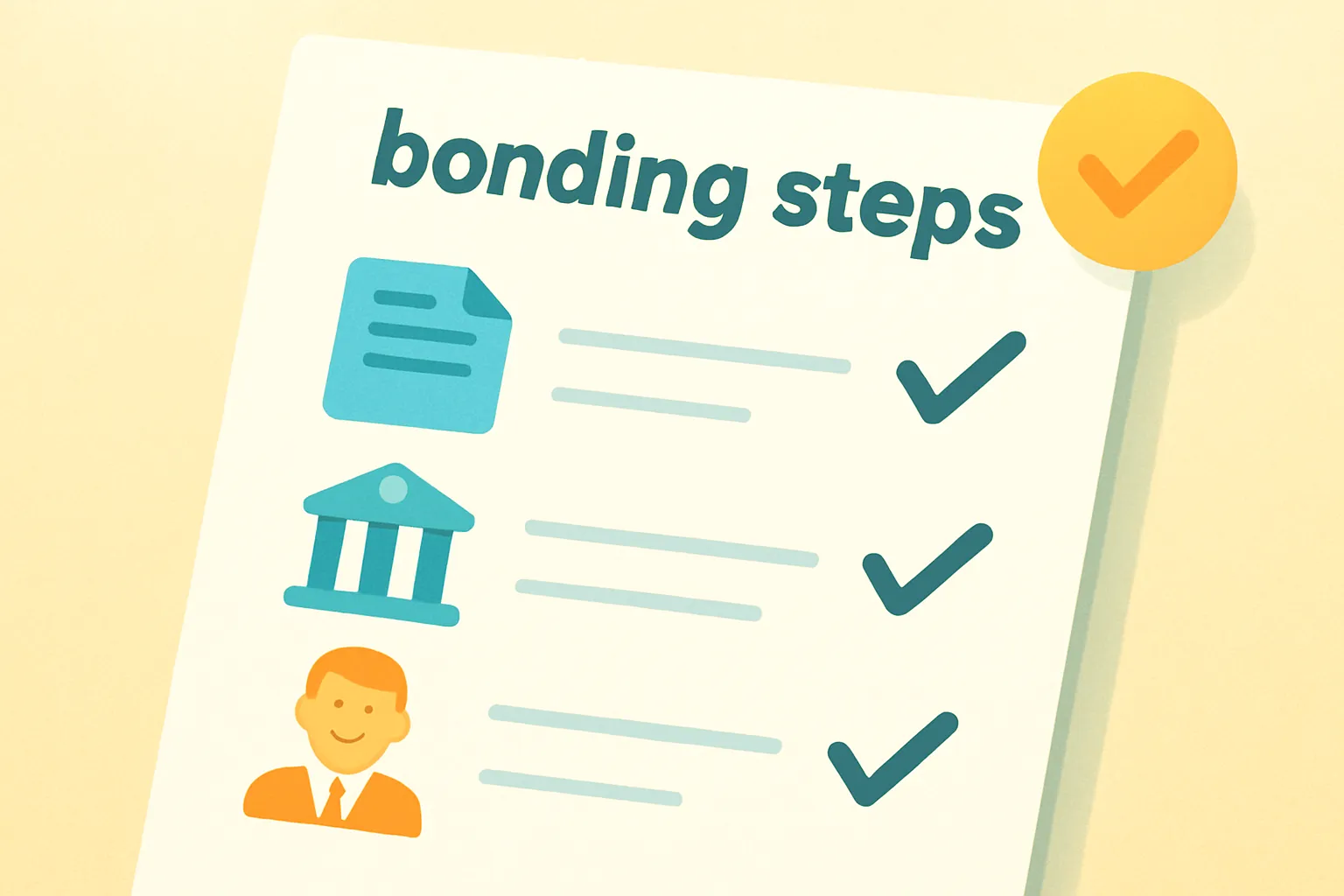
- Read the solicitation and the bond form required by the agency — state agencies often supply a specific performance‑bond form that must be used (OFCC and ODOT publish standard forms).
- Contact a licensed surety agent in Ohio and submit required documents: financials, credit authorization, resume of key personnel, and current backlog/WIP. The agent negotiates with surety markets and returns a rate quote.
- After award you purchase the bond: the surety issues the bond executed by an admitted carrier and an authorized agent. For state DOT work the director (or designee) must accept the surety and the bond must include the superintendent of insurance certificate if requested by the agency.
- File the original bond with the contracting authority per their instructions. Keep copies and any power‑of‑attorney documents for your file. The contractor normally pays the premium and may recover the cost in the bid price; check the contract for clauses that assign premium costs to subcontractors or to the contractor. (dam.assets.ohio.gov)
Practical filing tip: request the agency’s bond checklist before you submit so you avoid time‑critical defects (missing signatures, non‑admitted surety, or absent power‑of‑attorney) that can forfeit your award.
Comparison: bid bond vs performance bond vs payment bond
| Bond type | What it covers | Who typically needs it | When it’s triggered |
|---|---|---|---|
| Bid bond | Owner is compensated if low bidder refuses to contract | Bidders submitting proposals on public works | If the winning bidder fails to enter the contract or provide required bonds |
| Performance bond | Completes the work or pays cost to complete | Prime contractor awarded the contract (owner as obligee) | Contractor default or failure to perform |
| Payment bond | Ensures subcontractors/suppliers are paid | Prime contractor on public works | Subcontractor/supplier files valid claim for unpaid labor/materials |
(Ohio statutes and agency contract documents set the amounts and forms for these bonds; for DOT work and many state projects the performance and payment bonds are typically 100% of contract value).

Common mistakes contractors and consultants make when bonding a public project (and how to avoid them)
- Waiting to talk to a surety until after award — result: failed bond delivery and possible forfeited award. Fix: engage a surety agent during bid prep.
- Submitting the wrong bond form or a bond from an unlicensed surety — result: non‑acceptance. Fix: use the agency’s required bond form and verify the surety’s admitted status (check Ohio Department of Insurance or Treasury Circular 570 for federal projects).
- Forgetting SBA fees when budgeting for an SBA‑guaranteed bond. Fix: add the 0.6% SBA guarantee fee to your premium calculations when using SBG.
- Assuming consultants are never required to bond — Fix: read the solicitation; design‑build or construction manager contracts can impose bonding on consultants if their scope includes construction work.
Decision checklist before you bid an Ohio public‑works job
- Has the solicitation specified a 100% performance and payment bond? (If DOT or Chapter 153 project, expect 100%.)
- Do you have CPA‑prepared financials and a WIP/backlog schedule ready for the agent?
- Have you confirmed the surety is admitted in Ohio and (for federal) on Treasury Circular 570? (fiscal.treasury.gov)
- If you’re a small firm, did you check SBA’s SBG eligibility and include the 0.6% fee in your bid math?
- Who pays the premium under the contract terms — contractor, subcontractor, or owner? (Confirm in the contract.)

Frequently asked questions
How much of the contract value must a performance bond cover in Ohio?
For many state public-works contracts (including DOT work) the required penal sum is equal to 100% of the contract amount under Ohio Revised Code §5525.16 and Chapter 153 contract rules. Local agencies can vary, so confirm with the solicitation.
Will a consultant doing design work need a performance bond?
If your contract is strictly professional services, agencies often require professional liability rather than a performance bond. If the contract includes construction or you are the prime contractor on a public improvement, the agency may require performance/payment bonds. Check the solicitation and agency contracting rules.
Do I pay the full bond amount or only a premium?
You pay only the premium (a percentage of the bond amount) to the surety. The surety guarantees the full bond amount to the obligee, but you remain financially liable to the surety if a claim is paid. Typical market premium ranges are reported in consumer‑facing guides at roughly 0.5%–3% for qualified firms.
What if I can’t qualify for a commercial surety?
The SBA Surety Bond Guarantee program helps eligible small firms get bid, payment and performance bonds; note SBA adds a 0.6% guarantee fee on payment/performance bonds it guarantees. Contact an SBA‑approved surety agent early.
Who verifies that a surety is allowed to write bonds in Ohio?
Confirm with the Ohio Department of Insurance that the surety is licensed to transact surety business in Ohio; for federal work, also check the U.S. Department of the Treasury Circular 570 listing of approved sureties.
Bottom line
Ohio public‑works solicitations typically require 100% performance and payment bonds; what you actually pay is a premium — a percentage of that bond — that depends on your credit, financial statements and experience. Before you bid, get a surety agent involved, assemble clean financials, check whether you qualify for SBA’s guarantee (and add the 0.6% fee if you use it), and confirm the agency’s exact bond form and filing instructions. For consultants, read the solicitation carefully to see whether the agency treats your scope as construction (bond required) or professional services (insurance focus). For related reads on consultants and Ohio public‑works issues, see Do consultants bidding Ohio public works need payment bond, Are consultants on Ohio public works prevailing wage, and What insurance Ohio requires for state consultant contracts.
Questions to ask your surety agent (short list):
- What exact rate will you quote for this contract amount and why?
- What documents do you need from me now (financials, WIP, references)?
- Will this surety issue the bond in Ohio and meet the agency’s rating/authority requirements?
- If we need SBA backing, what are the timing and the 0.6% fee implications?
Decision action: call a licensed Ohio surety agent with your current financials and the solicitation reference so you can get a rate schedule before you finalize the bid.
Sources
- codes.ohio.govcodes.ohio.gov
- moneygeek.commoneygeek.com
- sba.govsba.gov
- codes.ohio.govcodes.ohio.gov
- cuyahogacounty.govcuyahogacounty.gov
- dam.assets.ohio.govdam.assets.ohio.gov
- fiscal.treasury.govfiscal.treasury.gov

Stephanie Mitchell has 20 years of experience researching and explaining business insurance topics for small business owners. About the author · Editorial standards