Table of contents
- Key takeaways
- Should landscapers insure mowers and trailers separately?
- What coverage types apply to mowers, small machines and hand tools?
- Are trailers covered by commercial auto or a separate policy?
- What affects the cost of insuring mowers and trailers?
- How to decide whether to schedule a mower or trailer separately: a checklist
- How to buy and compare coverage — specific steps to follow
- A realistic scenario
- How state rules, contracts and lenders can affect what you must buy
- Frequently asked questions
- Bottom line
You usually need separate coverage for mowers (tools/equipment) and trailers (vehicles). Mowers and other portable gear are best insured on an equipment floater—or “tools and equipment” (inland marine)—while trailers are treated like vehicles under your commercial auto program and often must be listed or endorsed separately for physical damage. This article explains what each option covers, when to schedule items, what drives price, common mistakes landscapers make, a practical decision checklist, and the exact questions to bring to your agent. 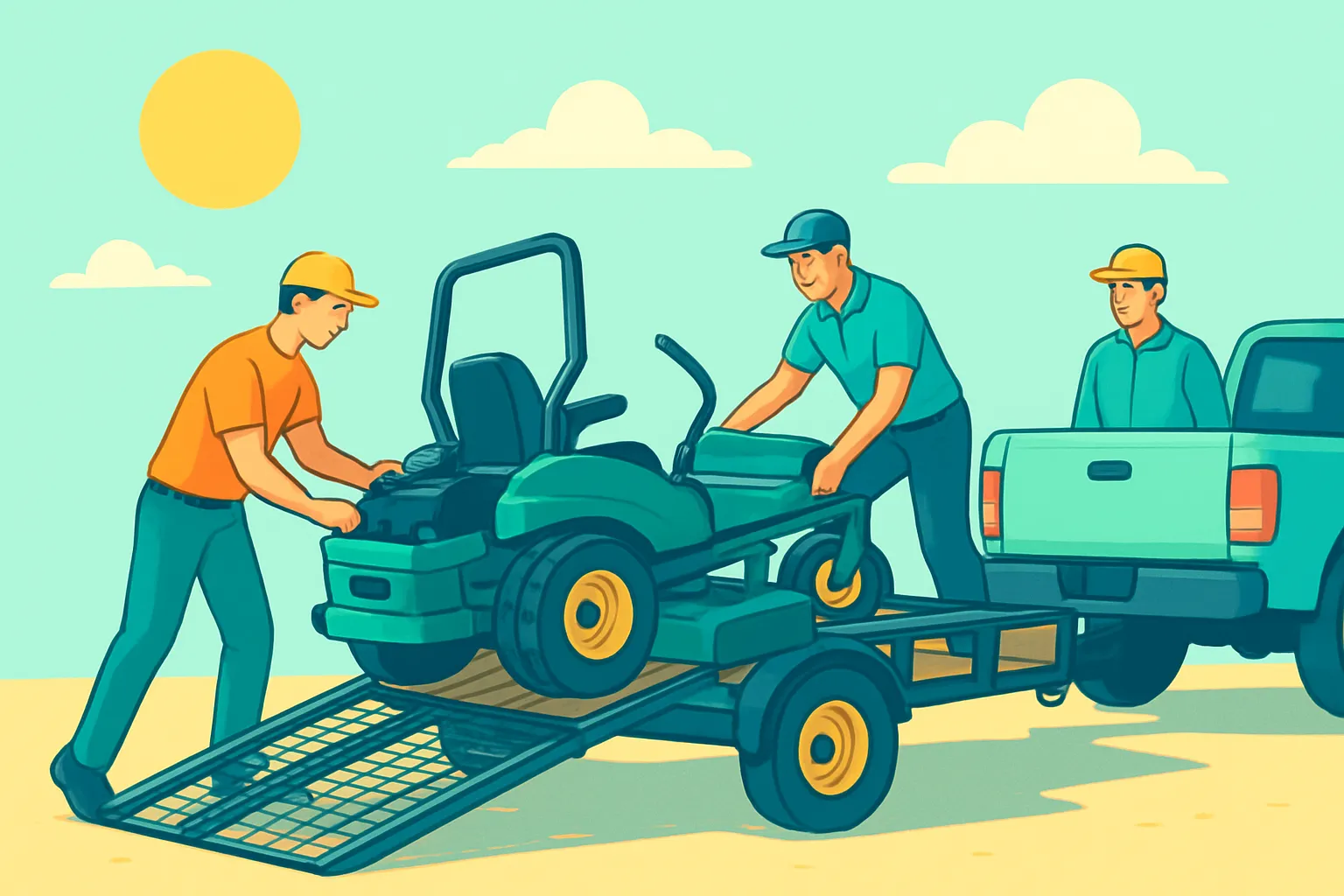
Key takeaways
- Mowers and portable tools: typically insured with an equipment floater / inland marine (follows the machine wherever it goes). (Insurance Information Institute). (iii.org)
- Trailers: generally treated as vehicles (business auto/commercial auto); liability may follow while hitched but physical damage to the trailer usually requires it be listed or endorsed. (Insurance Information Institute; NAIC). (iii.org)
- Don’t rely on a BOP or personal auto: BOPs and personal auto policies usually won’t cover vehicles used for business or equipment in transit — you’ll need inland marine and commercial auto coverages instead. (III; SBA). (iii.org)
- The right choice depends on item value, how you use it (on-truck vs towed), and contract or lender requirements — use the decision checklist below. (NALP; NerdWallet). (landscapeprofessionals.org)
Should landscapers insure mowers and trailers separately?
Yes — in most cases you should. Mowers and other movable equipment are best placed on an equipment floater (inland marine / tools & equipment) because that coverage “follows” the item wherever it’s used or stored. Trailers are normally treated as autos under a commercial auto policy: liability for a hitched trailer can be covered by the towing vehicle’s auto policy, but damage to the trailer itself usually requires the trailer be scheduled or endorsed on your commercial auto (or covered by a standalone trailer physical damage endorsement). The split exists because one policy class is for movable business property and the other for vehicles and highway risks.
How this plays out for landscapers:
- If a mower is stolen from your trailer overnight, an equipment floater or tools-and-equipment endorsement typically covers replacement. (nerdwallet.com)
- If that trailer rolls in transit and the trailer frame is bent, your commercial auto/trailer physical damage coverage (if scheduled) is the likely payor.
What coverage types apply to mowers, small machines and hand tools?
- Equipment floater / Inland Marine (Tools & Equipment): primary option for mowers, tractors, blowers, chainsaws and similar gear when they travel between jobsites or are stored in a trailer. The floater can be written per-item (scheduled) or blanket (one aggregate limit). As of October 2026 the Insurance Information Institute explains inland marine is the standard for “property on the move.”
- Tools & equipment endorsement on a BOP: some carriers attach limited off-premises tools coverage to a BOP, but those endorsements often have lower limits and narrower triggers than a standalone inland marine. Compare wording carefully.
- Equipment breakdown / mechanical breakdown endorsements: these protect against sudden mechanical failure (not wear-and-tear) and may be sold separately for high-value machines. Check if your floater excludes mechanical breakdown. (NerdWallet).
Table: Coverage types — what they cover and who needs them
| Coverage | What it covers | Who needs it | Typical trigger |
|---|---|---|---|
| Equipment floater / Inland marine | Owned movable equipment (mowers, tractors, blowers) on-site, in transit, or stored off-premises | Landscapers with portable gear or expensive ride‑ons | Theft, fire, collision in transit, vandalism; follows the item |
| Tools & equipment endorsement on BOP | Smaller tools and some equipment when on the business premises or limited off-premises | Small teams with modest tool value | Theft or damage at listed locations; limited off-premises protection |
| Commercial auto (scheduled vehicle) | Trucks, vans, and listed trailers — liability and physical damage for scheduled vehicles | Businesses owning work trucks, trailers with GVWR requiring commercial registration | Auto crashes, theft of vehicle/trailer, liability while on road |
| Trailer physical damage endorsement | Physical damage to owned trailers (comprehensive/collision) | Landscapers owning trailers used regularly to carry equipment | Collision, vandalism, fire affecting the trailer itself |
| (Descriptions paraphrase III, NAIC and NerdWallet guidance). |
Are trailers covered by commercial auto or a separate policy?
Trailers are generally part of the commercial auto program, but coverage depends on how the trailer is owned, used and listed:
- Liability for damage you cause while towing a trailer is often provided by the business auto policy for attached trailers; however physical-damage coverage for the trailer itself commonly requires the trailer be listed (scheduled) on the declarations page or covered by a specific trailer endorsement. The NAIC and III outline that auto policies treat trailers differently than floating equipment.
- Non-owned trailer exposures (you tow someone else’s trailer or rent one) create gaps unless your commercial policy includes a “non‑owned trailer physical damage” endorsement or you obtain a trailer interchange agreement. Don’t assume hired or rental contracts plug the hole.
Practical note: the ISO/BAP and symbol system used by auto policies distinguishes trailers in the declarations — that’s why carriers commonly require each trailer’s VIN, GVWR and use to be recorded. Ask your agent whether your business auto uses symbol wording that covers your trailer(s). (NAIC/ISO forms). (content.naic.org)
What affects the cost of insuring mowers and trailers?
There’s no single national price — premiums vary by item value, location, usage, loss history and security. Major drivers include:
- Total value and age of equipment (higher value = higher floater premium). (NerdWallet).
- How often equipment moves and whether it’s left overnight in unsecured locations (in-transit and theft exposure raises rates). (Insurance Journal; NALP). (insurancejournal.com)
- Trailer GVWR and whether the trailer is registered/commercial (FMCSA rules can change exposures for large rigs; NALP points out thresholds to watch).
- Your commercial auto loss history, driver screening, and safety programs — fleet performance influences trailer premiums since trailers are part of the auto program. (NALP; III). (blog.landscapeprofessionals.org)
If you need a ballpark for budgeting, consumer outlets like NerdWallet say equipment insurance costs vary widely and are quoted by value and risk rather than a predictable per-item premium — gather quotes and ask carriers how they price newly acquired equipment. (NerdWallet).
How to decide whether to schedule a mower or trailer separately: a checklist
Use this short, practical checklist when reviewing each item.
- Item value: is the unit worth more than your floater or BOP off-premises limit? If yes, schedule it. (NerdWallet; III).
- Mobility and use: does the item travel nightly in a trailer or sit on a truck? If it moves a lot, inland marine that “follows” the item is preferable.
- Trailer ownership: do you own the trailer? If yes, list it on commercial auto for physical damage; if you regularly rent or borrow trailers, you need non‑owned trailer endorsements.
- Contract or lender requirement: does a client contract or a lender require specific limits or scheduled items? If so, follow their specs and get it in writing on the policy. (NALP). (documents.landscapeprofessionals.org)
- Frequency of high-risk exposures: overnight parking in unsecured lots, operation in high-theft areas, or frequent interstate travel increase the need to schedule and increase limits. (Insurance Journal; NALP).
- Mechanical breakdown vs physical loss: if you need cover for wear-and-tear or mechanical failure, ask whether that’s covered — many floaters exclude mechanical breakdown. (NerdWallet).
If three or more answers point to high value, frequent transit, or contractual demands, schedule the item separately and retain documentation (serial/VIN numbers, purchase receipts, photos).
How to buy and compare coverage — specific steps to follow
- Inventory and value: make a spreadsheet with make/model, serial or VIN, purchase date, purchase price, current replacement cost, and typical storage location. Carriers will ask for this. (SBA; NALP). (sba.gov)
- Ask for quotes separately for (a) an equipment floater (itemized or blanket) and (b) commercial auto with trailers scheduled and with a non‑owned trailer endorsement if applicable. Compare per‑item limits, deductibles, and per‑occurrence vs aggregate wording. (III; Insurance Journal).
- Verify transit coverage wording: some floaters cover “in transit” only while attached to the named vehicle; others are broader. Confirm whether coverage applies during loading/unloading and at rest. (NerdWallet; III).
- Confirm mechanical-exclusion language: if a $20,000 mower fails from mechanical wear, typical property/inland marine polices may exclude wear-and-tear — consider a separate equipment breakdown product if needed. (NerdWallet).
- Bundle where it helps: if your BOP plus endorsements give equivalent protection at a lower cost and acceptable terms, bundling can simplify claims. But don’t trade off coverage breadth for convenience. (SBA; III).
Internal controls that lower price: secure parking, alarms, VIN etching, and documented safety and driver programs reduce theft and collision frequency and often lower premiums. NALP emphasizes fleet safety programs for landscape firms.
Questions to ask your agent (bring these to your meeting)
- For this specific mower/tractor (VIN/serial listed), will it be fully covered while on the trailer overnight and during transit? Which policy pays first? (III; NerdWallet).
- Is the mower covered on an “all-risk” or named‑perils basis? Are mechanical breakdown and wear-and-tear excluded? (NerdWallet).
- How is my trailer treated on the commercial auto policy: is it automatically covered while hitched, and do I need to schedule it for comprehensive/collision? What are the limits and deductibles? (III; NAIC).
- If I borrow or rent a trailer, will my policy cover physical damage or do I need a trailer interchange or non‑owned trailer endorsement? (III).
- If a client’s contract requires specific limits or scheduled equipment, can you place that coverage and issue a certificate naming the client? (NALP).
Common mistakes landscapers make when insuring mowers and trailers
- Assuming the BOP or a personal auto will cover business equipment or trailers. BOPs rarely replace dedicated inland marine or commercial auto coverage. (III; SBA).
- Not scheduling high-value equipment or the trailer on the declarations — leaving a physical-damage gap. (III; Insurance Journal).
- Forgetting to list newly acquired equipment promptly — some floaters only cover “newly acquired” for a short period and then require an added endorsement. (Insurance Journal; NerdWallet).
- Using inaccurate values (underinsuring) or failing to track serial numbers and photos, which slows claims and can reduce recovery. (SBA; NALP).
A realistic scenario
Say you run a two-person lawn crew. You own a $12,000 zero-turn mower and a $5,000 utility trailer. You park the trailer overnight in an unsecured lot one night and the mower is stolen. If the mower is scheduled on an equipment floater (with adequate limits), that floater should replace the mower. If the trailer wasn’t scheduled on your commercial auto and the thief also damaged the trailer, your commercial auto physical damage claim may be denied for the trailer — because the trailer wasn’t listed. This illustrates why you should schedule high-value units and list trailers you own. (III; NerdWallet).
How state rules, contracts and lenders can affect what you must buy
- State requirements: most states require commercial auto insurance for vehicles used for business; requirements increase if your rig crosses into FMCSA thresholds (longer trailers, higher GVWR). NALP notes you must follow state vehicle codes and FMCSA rules where applicable. Confirm trailer registration rules with your DMV.
- Client contracts and lenders: many commercial clients and equipment loans require scheduled coverage or replacement-cost limits and a certificate of insurance listing the client or lienholder. Discuss contract wording with your agent before you sign. (NALP; SBA).
Frequently asked questions
Do I need an equipment floater if I already have business property on a BOP?
Not always — but often yes. BOP off‑premises endorsements tend to be limited. If your equipment travels nightly or is high-value, an inland marine/equipment floater gives broader, mobile protection. Compare limits and triggers before relying on a BOP.
If my trailer is hitched to a covered truck, will the truck’s policy fix the trailer?
Liability for damage you cause while towing is frequently covered by the towing vehicle’s commercial auto liability, but physical damage to your owned trailer typically requires it to be scheduled for comprehensive/collision. Check the declarations and any trailer endorsements.
Can I list all my small tools on one blanket floater?
Yes — many carriers offer a blanket tools & equipment schedule for smaller items. For very high-value individual items (e.g., a $25k walk‑behind), schedule them individually to ensure correct valuation and coverage.
What if I borrow a trailer from a supplier for a day?
Borrowing introduces “non‑owned trailer” exposure. You may need a non‑owned trailer physical damage endorsement or a trailer interchange agreement to close the gap. Don’t assume coverage exists.
Bottom line
Treat mowers and trailers as different risks: insure movable machines on an equipment floater (inland marine / tools & equipment) and treat trailers as auto exposures that should be scheduled on your commercial auto program. Inventory every asset, document value and VIN/serial numbers, and ask your agent for written confirmation of which policy responds in each scenario. Bring the checklist and the agent questions above to your meeting and compare written quotes before you remove or rely on any coverage. For more on cost and typical limits for landscapers, see our guides on How much does landscaper insurance cost per year? and How much general liability insurance does a landscaper need, and review employer obligations in Do landscapers need workers' compensation insurance. (nerdwallet.com)
Sources cited in the article include the Insurance Information Institute (III) on inland marine and business auto, the National Association of Landscape Professionals on fleet and trailer safety, the U.S. Small Business Administration on business insurance basics, Insurance Journal on equipment floater and inland marine market notes, NAIC/ISO material on commercial auto/trailer treatment, and NerdWallet on tools/equipment and landscaper insurance purchasing guidance.
Sources
- iii.orgiii.org
- iii.orgiii.org
- iii.orgiii.org
- landscapeprofessionals.orglandscapeprofessionals.org
- nerdwallet.comnerdwallet.com
- content.naic.orgcontent.naic.org
- insurancejournal.cominsurancejournal.com
- blog.landscapeprofessionals.orgblog.landscapeprofessionals.org
- documents.landscapeprofessionals.orgdocuments.landscapeprofessionals.org
- sba.govsba.gov
- nerdwallet.comnerdwallet.com

Stephanie Mitchell has 20 years of experience researching and explaining business insurance topics for small business owners. About the author · Editorial standards