Table of contents
- Key takeaways
- Does insurance cover stolen camera gear during a shoot?
- Which policies cover camera equipment on location?
- What should you do—and how do claims work—after gear theft?
- What exclusions and gaps catch photographers off guard?
- What would you do? A quick decision checklist
- Frequently asked questions
- Bottom line
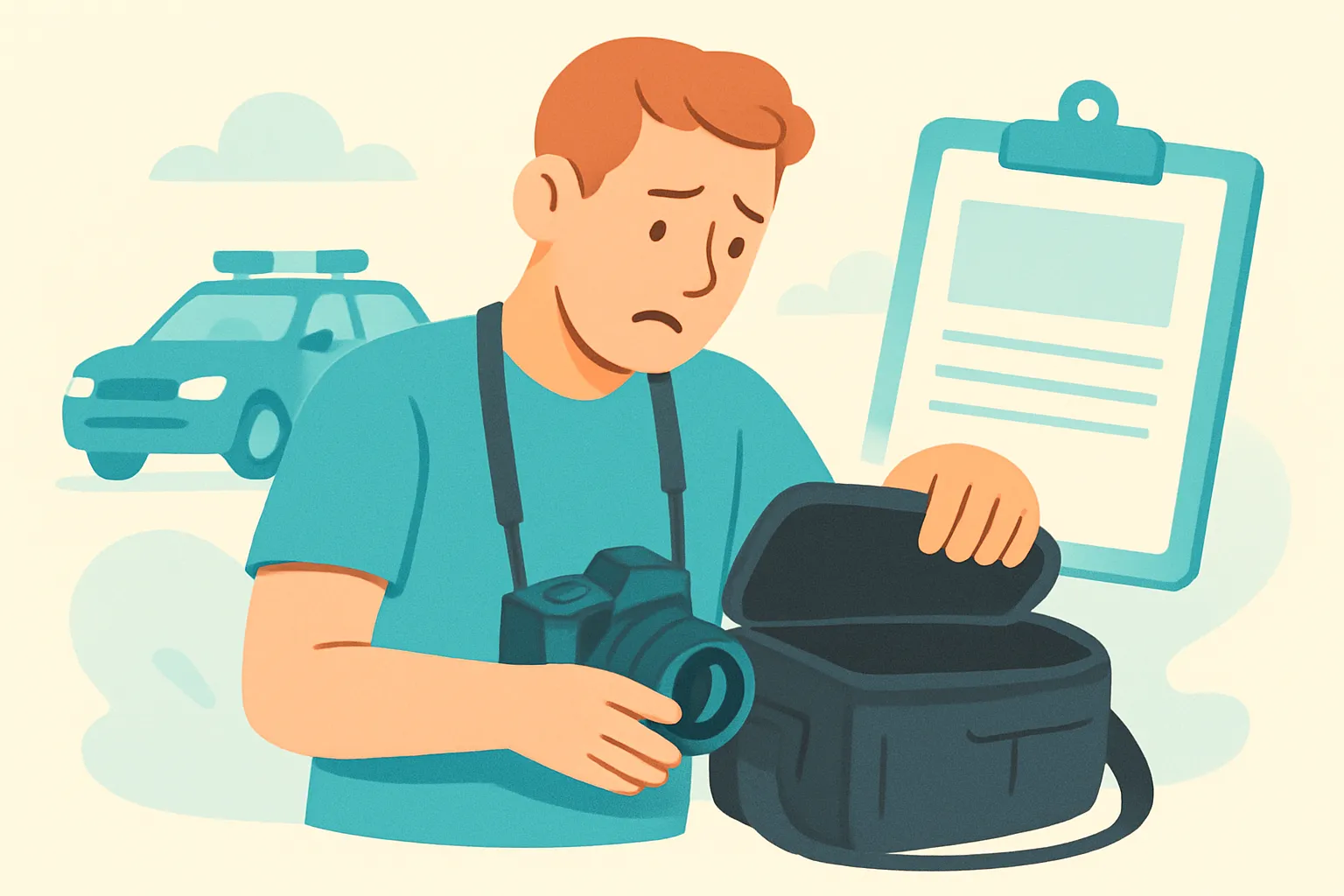
Say Jordan, a freelance wedding photographer, loads in at a downtown hotel. During family formals, she steps five feet away to fix a light. In this hypothetical, when she turns back, the backpack with a camera body, two lenses, and audio gear is gone. Security can’t find video, the timeline is tight, and the ceremony starts in 20 minutes.
If your camera equipment is stolen during a shoot, the claim falls to your business property coverage—typically an equipment floater (inland marine) or scheduled gear on a business policy. Homeowners or renters policies usually have very low limits for business equipment, especially off‑premises. You’ll need to file a police report, contact your insurer right away, document what was taken, and pay your deductible if the loss is covered. Without the right coverage, you’re on the hook for replacement and any knock‑on costs to finish the job.
Key takeaways
- Theft of camera gear on location is usually covered by an equipment floater (inland marine), not your auto policy or a standard homeowners/renters policy. The Insurance Information Institute (Triple‑I) says inland marine commonly covers photography equipment in transit or off‑site. (iii.org)
- Typical homeowners/renters policies cap business equipment at low amounts and much less off‑premises. Triple‑I notes limits often around $2,500 at home and $250 away from home. (iii.org)
- File a police report and notify your insurer promptly; expect to provide receipts/serials and a proof‑of‑loss. Triple‑I outlines these claims steps for businesses. State guides echo the need to document and meet deadlines. (www-legacy.iii.org)
- Watch for exclusions: theft from an unattended vehicle, no visible forced entry, or “mysterious disappearance.” Some inland marine forms restrict these unless you buy back coverage. (insurancejournal.com)
- Personal items stolen from a vehicle are generally covered by homeowners/renters—not auto. NAIC notes “personal effects” coverage is separate from your car insurance; for business gear, you need business coverage. (content.naic.org)
Does insurance cover stolen camera gear during a shoot?
Yes—if you’ve insured your equipment as business property, theft during a shoot is typically a covered cause of loss. Most photographers use an equipment floater (inland marine), which covers movable gear (bodies, lenses, lighting, drones you own) wherever it goes—studio, venue, car, or checked luggage—subject to policy terms. Triple‑I lists “photography equipment” as an inland marine example and notes it can also cover property of others in your care via a bailee option.
If you rely on a homeowners or renters policy, the limits for business property are usually too small and may drop away from home—Triple‑I cites common caps of about $2,500 at home and $250 off‑premises. That’s rarely enough for even one camera and lens.
Helpful deep dives:
- See how business coverage fits together in Do Freelance Photographers Need Business Insurance.
- Working from a studio? Compare options in Commercial Property Insurance for Photographers.
- Wondering about personal policies? Start with Does Renters Insurance Cover Camera Gear.
Which policies cover camera equipment on location?
Here’s how the common policies stack up when gear goes missing mid‑shoot.
| Coverage type | What it covers | Who needs it | Typical theft trigger |
|---|---|---|---|
| Equipment floater (inland marine) | Scheduled or blanket camera/lighting gear anywhere (on set, in transit), subject to exclusions | Any photographer who travels with gear | Theft of insured items from a covered location or vehicle, per policy terms. Triple‑I includes photography gear under inland marine. |
| Business personal property (BPP) under a BOP | Contents at your primary premises; some off‑premises coverage may apply, often with lower sublimits | Studio owners with gear that mostly stays put | Theft at the insured premises; check your BOP for any off‑premises limits and conditions. (iii.org) |
| Homeowners/renters with business endorsement or in‑home business policy | Modest business property limits; sometimes liability; often not robust for pro camera kits | Hobbyists or micro‑businesses with limited gear at home | Theft is covered but commonly capped—Triple‑I cites ~$2,500 at home/$250 off‑premises. |
| Personal auto insurance | Damage/theft of the car, not your business gear | Anyone who drives | Your auto comprehensive responds to vehicle theft/damage; stolen contents are generally not covered by auto insurance. NAIC explains “personal effects” are a separate coverage typically tied to home/renters. |
| Bailee/customer’s property (often via inland marine) | Client property in your custody (e.g., heirloom album you’re digitizing) | Studios handling client items | Theft of clients’ property while in your care; available as a specific inland marine option. |
| Rented/borrowed equipment | Gear you don’t own | Anyone renting lenses, bodies, lighting | Often requires a rented equipment endorsement or separate policy; many rental houses require proof before release. See ASMP’s buying‑policy pointers. (asmp.org) |

What should you do—and how do claims work—after gear theft?
Act fast so you don’t miss contractual or policy deadlines.
-
Get safe, then call the police. Most policies require you to report theft to law enforcement and obtain a report number. Triple‑I’s business claim guidance lists contacting police and documenting the scene among the first steps.
-
Notify your insurer or agent right away. Ask about required forms, time limits, and whether an adjuster will inspect. The California Department of Insurance’s claims guide explains you may be asked to submit a proof‑of‑loss and that faster, fuller information speeds settlements. (insurance.ca.gov)
-
Document everything. Make a list of stolen items with serial numbers, purchase dates, and receipts. Photograph any damaged locks, broken cases, or surroundings. Triple‑I emphasizes preparing an inventory and substantiating your loss with receipts/photos.
-
Mitigate further loss. Secure the location, arrange backup gear, and keep receipts for reasonable emergency expenses if your policy covers extra expense. State guidance also stresses preventing further damage and saving receipts.
-
Know how settlement works. Policies pay either replacement cost (RC) or actual cash value (ACV). With RC, you’re reimbursed for a similar new item (often after you submit the replacement receipt); with ACV, depreciation is deducted. Triple‑I explains the RC vs. ACV difference and that companies may first pay ACV, then the holdback after you replace.
In Jordan’s case, filing the police report and calling the insurer the same day preserves the claim. If her equipment is scheduled on an RC inland marine floater, she’ll work with the adjuster, provide receipts/serials, and replace items after any deductible, subject to exclusions.
What exclusions and gaps catch photographers off guard?
- Theft from an unattended vehicle. Many equipment policies exclude or limit theft from a vehicle unless there’s visible forced entry, the car was locked, or you buy an endorsement. Insurance Journal notes unattended‑vehicle and theft exclusions appear in inland marine‑type cargo forms, with options to buy back limited theft coverage—similar provisions are common in equipment floaters.
- Mysterious disappearance or “voluntary parting.” If gear “just goes missing” with no evidence of theft—or you hand gear to someone who tricks you—coverage can be limited or excluded. Check your definitions and exclusions.
- Off‑premises sublimits. BPP under a BOP can restrict coverage away from your studio. Read your Declarations and any “personal property off‑premises” terms. (www-legacy.iii.org)
- Business use under personal policies. Homeowners/renters policies typically restrict business gear and liability. Triple‑I cites low business property limits and limited off‑premises protection.
- Rented/borrowed gear. Many policies need a specific “rented equipment” endorsement. Some rental houses require proof that unattended‑vehicle theft is covered. ASMP advises confirming worldwide coverage, replacement value, and theft‑from‑vehicle terms when buying.
Pro tip: Build prevention into your workflow—lock rolling cases, keep one body on‑body, and assign a crew member to watch the staging area. SBA’s small‑business security guidance also stresses controlling physical access to devices that are easy theft targets. (sba.gov)

What would you do? A quick decision checklist
Run through this before your next job:
- What’s my equipment limit—and is it replacement cost or ACV?
- Are my high‑value items scheduled with current serial numbers?
- Do I have rented‑equipment coverage when I pick up lenses/lights?
- Does my policy cover theft from a locked, unattended vehicle? Any alarm/lockbox requirements?
- Do I have any off‑premises sublimits under my BOP vs. my floater?
- If a client’s property is in my custody, do I have bailee coverage?
- Who on my crew watches the gear staging area? What’s our lock‑up plan?
- Do my contracts address reshoots, delays, or force majeure if gear is stolen?
- Which receipts, photos, and serials will I need to substantiate a claim?
- Who do I call first—venue security, police (non‑emergency unless in progress), then my agent?
Questions to ask your agent
- Can you show me, in writing, how “theft from vehicle” is handled on my policy?
- Do I have worldwide coverage and any territory restrictions?
- What are my responsibilities to prevent loss (e.g., locked vehicle, alarm, safe, watch service)?
- How quickly must I report a theft and submit a proof‑of‑loss?
- If I switch from ACV to replacement cost, how does the holdback/replacement receipt process work?
Frequently asked questions
Does my auto insurance cover gear stolen from my car at a shoot?
No. Auto insurance covers the vehicle (comprehensive) but not your business equipment. NAIC explains “personal effects” theft is generally handled by homeowners or renters policies—not auto—and those policies have their own limits and exclusions; for pro gear, you need a business policy.
Will homeowners or renters insurance cover my professional camera kit?
Sometimes—but usually not well. Triple‑I reports typical business property limits around $2,500 at home and $250 off‑premises, which rarely replaces a pro body and lens. If you earn money from photography, consider a dedicated equipment floater.
What if the stolen gear belongs to a rental house?
You’re responsible under the rental agreement. Many policies require a rented‑equipment endorsement or separate limit. ASMP recommends confirming that your policy includes theft from unattended vehicles and replacement value for rented gear before pickup.
How do I prove ownership if I’ve lost some receipts?
Insurers typically accept other proof: serial numbers, photos, credit‑card statements, or manuals—alongside the police report. State consumer guides describe preparing detailed property lists and submitting a proof‑of‑loss when requested.
What if theft causes me to miss shots or reschedule?
Property insurance addresses the stolen items; disputes over missed coverage or reshoots are contract/professional‑liability issues. For how liability policies differ on a shoot, see General Liability vs Professional Liability for Photographers and costs overview in How Much Does Wedding Photographer Insurance Cost.

Bottom line
When camera gear is stolen mid‑shoot, coverage lives (or dies) in your policy details. Insure your kit on an equipment floater with replacement cost, confirm any theft‑from‑vehicle requirements, and schedule the expensive pieces. Keep serials and receipts handy, file a police report fast, and call your insurer the same day. If you depend on personal policies, expect tight limits—upgrade before your next job. If you handle client property or rent gear often, add the right endorsements. For broader protection, see Do Freelance Photographers Need Business Insurance and related studio coverage in Commercial Property Insurance for Photographers.
Sources
- iii.orgiii.org
- iii.orgiii.org
- www-legacy.iii.orgwww-legacy.iii.org
- insurancejournal.cominsurancejournal.com
- content.naic.orgcontent.naic.org
- iii.orgiii.org
- asmp.orgasmp.org
- insurance.ca.govinsurance.ca.gov
- www-legacy.iii.orgwww-legacy.iii.org

Stephanie Mitchell has 20 years of experience researching and explaining business insurance topics for small business owners. About the author · Editorial standards