Table of contents
- Key takeaways
- Do environmental consultants need a Professional Geologist (PG) license in California?
- What exactly counts as the “practice of geology” for others under California rules?
- Which environmental consultant tasks typically require a PG, CEG or CHG?
- What exemptions exist — can an environmental consultant avoid a PG license?
- Which state or local agencies expect a licensed geologist to sign environmental reports?
- How can an environmental consultant comply if they aren’t licensed?
- Insurance — what coverages should environmental consultants carry?
- How to check your legal status and where to get licensure info
- Frequently asked questions
- Bottom line
California short answer first: yes — if your environmental consulting work includes interpretation, evaluation, or preparation of geologic/hydrogeologic reports that clients or the public will rely on, California treats that as the “practice of geology.” You must hold a California Professional Geologist (PG) license (or the appropriate specialty) or have those parts done under the responsible charge of a licensed PG. That's the state rule that triggers licensure and possible enforcement. (bpelsg.ca.gov)
Below you'll find what the law means by “practice for others,” which common environmental tasks usually trigger a PG requirement, who is exempt, how agencies expect licensed sign‑offs, and what to do now — including a practical compliance checklist and questions to ask your insurance agent. It covers California rules (state law and the Board’s regulations) and points to where local agencies commonly require a licensed geologist to sign reports.

Key takeaways
- California’s Geologist and Geophysicist Act requires licensure for anyone who practices or offers to practice geology or geophysics for others, unless an exemption applies.
- “Practice for others” includes preparing reports, interpretations, evaluations, or recommendations that others will rely on — not just field sampling. The Title 16 regulations define the phrase and draw the line between nonprofessional tasks and professional practice. (regulations.justia.com)
- If your deliverable includes interpretation, remedial design, fate/transport opinions, hydrogeologic conceptual models, or a signed Phase II investigation report, plan for a licensed PG, Certified Engineering Geologist (CEG) or Certified Hydrogeologist (CHG) to prepare or sign it.
- Exemptions exist (in‑house reports used only within an employer, federal employees acting in their federal capacity, and subordinates working under responsible charge), but be cautious — local agencies and courts enforce licensure where interpretation is present.
- Agencies such as the State Water Board accept PG/CEG signers as Qualified SWPPP Developers (QSDs); many local permitting or CEQA reviewers require a licensed geologist/engineer to prepare or certify certain environmental reports. Check the specific agency guidance. (waterboards.ca.gov)
Do environmental consultants need a Professional Geologist (PG) license in California?
Short answer: if the work you deliver to clients involves the professional practice of geology (interpretation, evaluation, planning, mapping, geologic opinions), then yes — a license is required unless an explicit exemption applies. The Geologist and Geophysicist Act (Business and Professions Code §§7800–7887) places anyone who “practices or offers to practice geology or geophysics for others” under the Board’s jurisdiction.
The statute is enforced — unauthorized practice can lead to citations, fines, and orders to stop. California courts have upheld citations where a consultant’s work included analyses and interpretations that the Board considered professional practice (see Jaramillo v. State Bd. for Geologists & Geophysicists). That case is a useful example: the court affirmed enforcement where advertising and deliverables showed the consultant was offering interpretive geophysical services to the public. (law.justia.com)
What exactly counts as the “practice of geology” for others under California rules?
The Board’s regulations (Title 16, CCR §3003) define the “practice of geology or geophysics” and explain when work is “for others.” Key points you must know:
- “Practice for others” includes preparation of geologic or geophysical reports, documents or exhibits that are disseminated or made available so the public or a client can reasonably be expected to rely on them. Simple field data that are not interpreted may not be professional practice.
- The regulations clarify that purely technical field tasks lacking analysis/interpretation (e.g., data logging, instrument maintenance, raw data acquisition) are nonprofessional, but analysis and interpretation move the work into the professional zone. In practice, that distinction is fact‑specific.
If your deliverable says “we found,” “this indicates,” “recommend remedial approach,” or shows cross‑sections, conceptual site models, or other interpretations that clients will use to make decisions, it’s likely the practice of geology and requires licensure or responsible charge by a licensee.
Which environmental consultant tasks typically require a PG, CEG or CHG?
Tasks that commonly trigger the PG requirement in California include (but are not limited to):
- Phase II site characterization reports with interpreted soil/groundwater profiles, contaminant distribution, or fate‑and‑transport conclusions. (watsonville.gov)
- Remedial investigation reports, feasibility studies, remedial design or remediation oversight that include geologic/hydrogeologic decisions or design inputs.
- Hydrogeologic conceptual models, interpretations of groundwater flow, borehole log interpretation, or opinions on well construction, contaminant migration or source delineation.
- Geologic hazard reports, slope stability or engineering geologic evaluations submitted to permitting agencies.
- Any geologic or geophysical report or exhibit prepared for use outside your firm where the public or client will rely on the interpretations.
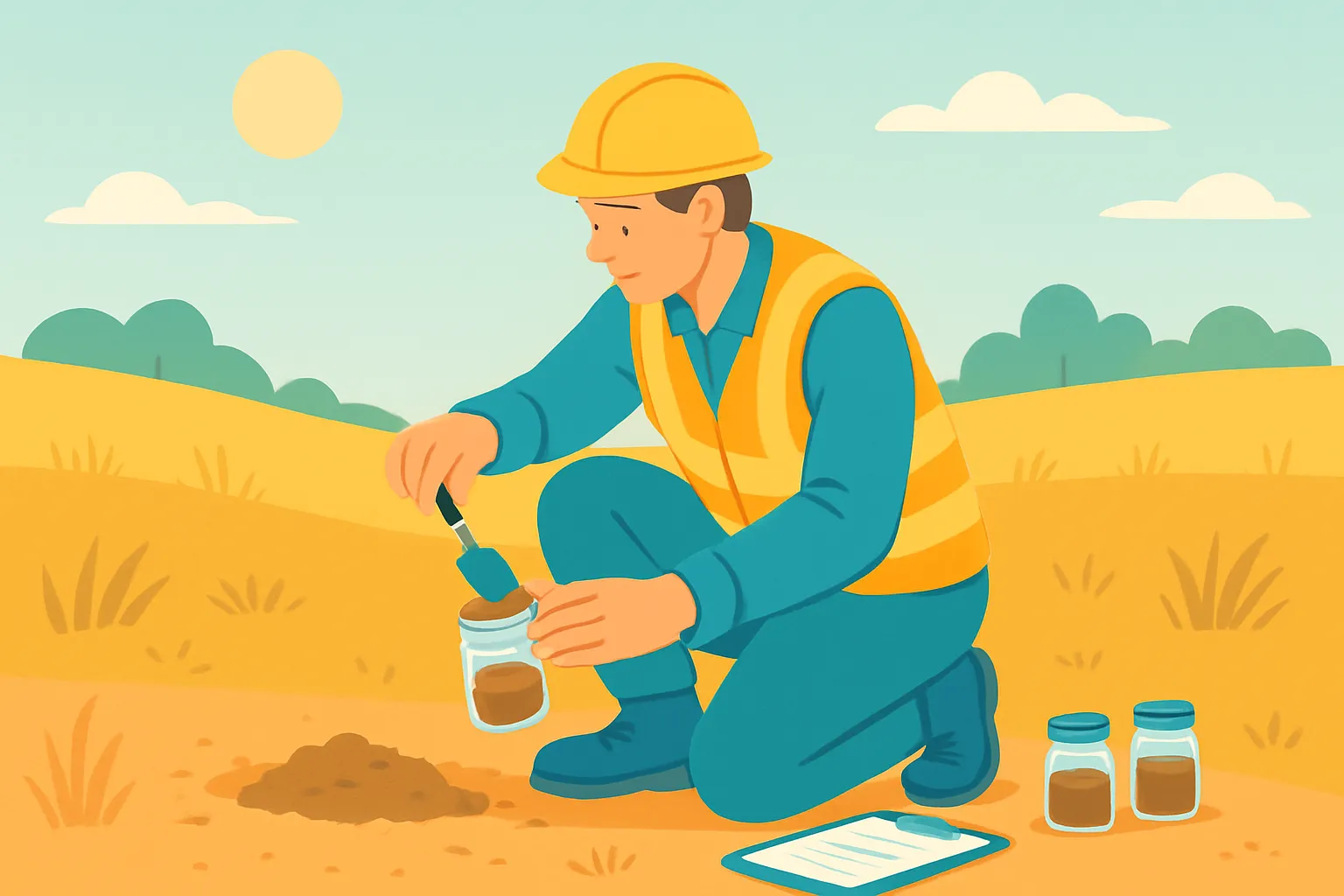
Tasks that often do not require a PG when they truly remain descriptive and internal include routine field sampling under direct supervision, laboratory analysis, chain‑of‑custody paperwork, or internal, in‑house reports not disseminated beyond your employer — but beware: if the same raw data are packaged into an interpretive report for a paying client, licensure is triggered.
What exemptions exist — can an environmental consultant avoid a PG license?
California law recognizes several limited exemptions (read the law and regs carefully for your situation). Notable exemptions include:
- In‑house reports used solely within an employer and not disseminated “for others” may be outside the Board’s jurisdiction. But if those same reports are submitted to regulators or clients, the exemption evaporates.
- Federal officers and employees acting solely in their federal capacity are exempt from state registration under §7836 of the Act.
- Subordinates (employees working under the responsible charge of a licensed PG/PE) are exempt insofar as they act only in that subordinate capacity; they cannot sign or claim responsibility for professional work.
The Board interprets exemptions narrowly; the Jaramillo enforcement case shows the Board will pursue unlicensed practice when interpretation is present. Always confirm with BPELSG if you think an exemption applies.
Which state or local agencies expect a licensed geologist to sign environmental reports?
Agencies commonly require or accept PG/CEG/CHG sign‑offs for particular document types:
- State Water Resources Control Board (Construction General Permit and related guidance) recognizes a California registered professional geologist or engineering geologist as an acceptable credential for the Qualified SWPPP Developer (QSD) role. If you prepare SWPPPs or certain stormwater documents, a PG can be the QSD/QSP signer.
- Local permitting and CEQA reviewers often require a licensed PG or PE for Phase II reports, remediation plans, geologic hazard evaluations and similar documents. Example: the City of Watsonville CEQA/entitlements materials specifically expect a California Professional Geologist or Professional Engineer for certain Phase II/remedial tasks.
- State cleanup programs and contract short‑lists (e.g., DTSC prequalified lists) frequently stipulate that remediation work be performed by or under the direction of qualified registered professionals (PG or PE). Check specific program guidance.
When in doubt, read the submission and certification requirements for the exact report you’ll file — many agencies list who may sign, and some accept a PE in lieu of a PG when the engineer has relevant geologic expertise. (water.waterboards.ca.gov)
How can an environmental consultant comply if they aren’t licensed?
If your current practice includes deliverables likely to be construed as the practice of geology, here are practical options:
- Get licensed: apply for PG licensure through the Board (BPELSG). The Board’s application requirements, exams and experience rules are on its site; prepare for education, experience documentation and the state exams. (bpelsg.ca.gov)
- Work under the “responsible charge” of a licensed PG/PE: employ or subcontract a licensed professional to review, take responsible charge of, stamp and sign geologic deliverables. The statute allows subordinate staff to work so long as a licensee assumes responsibility.
- Limit deliverables to non‑interpretive tasks or produce internal “in‑house” data packages that the client understands are raw data only (but this reduces the services you may offer and can be impractical).
Checklist — immediate compliance steps
- Review your typical deliverables for interpretation, recommendations, or design input. If they exist, assume licensure may be required.
- Read the Board’s definition of practice (Title 16, §3003) and the Geologist and Geophysicist Act (§§7800–7887).
- If you lack a license, contract with or hire a PG/CEG/CHG to take responsible charge and sign/seal relevant reports. Ensure the contract language documents “responsible charge.”
- Alert clients and revise proposals: add a clause explaining which deliverables will be prepared or signed by a licensed professional and which are raw data only.
Insurance — what coverages should environmental consultants carry?
Licensure and professional exposure affect insurance needs. The core coverages environmental consultants should consider are:
- Professional Liability (Errors & Omissions, E&O): covers claims alleging negligent professional advice, missed contamination, or flawed remedial design. The Insurance Information Institute explains that businesses offering professional services should carry E&O to cover professional mistakes. (iii.org)
- Contractors Pollution Liability (CPL) / Environmental Impairment Liability (EIL): covers third‑party bodily injury, property damage, and cleanup costs caused by pollution during operations or remediation. Insurance trade press shows carriers and specialty programs offering combined CPL + professional forms for consultants and contractors. (insurancejournal.com)
- Commercial General Liability (CGL): covers premises and third‑party bodily injury/property damage not excluded by pollution endorsements — but standard CGL policies commonly exclude pollution claims, so don’t rely on CGL alone for contamination exposures.
- Workers’ Compensation and Commercial Auto: if you have staff or drive to sites. Many municipal contracts require specific limits for auto and workers’ comp. (in.gov)
Comparison: common coverages for environmental consultants
| Coverage type | What it covers | Who typically needs it | Typical trigger |
|---|---|---|---|
| Professional liability (E&O) | Defense and damages for negligent professional advice, report errors | All consultants who give opinions, Phase I/II authors, remedial designers | Client alleges faulty report or incorrect recommendation |
| Contractors Pollution Liability (CPL) / EIL | On‑site/off‑site pollution cleanup, third‑party injury, property damage | Consultants who do field work, samplers, remediation contractors | Release, spill, migration discovered after field work |
| Commercial General Liability (CGL) | Third‑party BI/PD (non‑professional) | Firms with field visits, clients on site | Slip, trip, damage to client property |
| Workers’ Compensation | Employee injury on the job | Any firm with employees | On‑site injury to staff |
| Commercial Auto | Liability for business vehicle use | Firms with trucks, sampling vans | Crash during site visit |
For more on liability distinctions (general vs professional), see Insurance Information Institute and trade reporting on environmental liability programs.
Questions to ask your insurance agent (or broker)
- Does my professional liability (E&O) policy cover pollution‑related claims stemming from my reports, or is there an absolute pollution exclusion?
- If policy is claims‑made, what is the retroactive date and does it cover prior acts?
- Do you offer a combined CPL + E&O form designed for environmental consultants? If so, what are the standard exclusions? (insurancejournal.com)
- What limits do typical public‑sector or developer contracts require in my market? (Clients often ask for $1M–$3M E&O and separate pollution limits; check contracts.)
- Will subcontractors’ work be covered under my policy, or should I require them to carry their own CPL/E&O and name me as an additional insured?
- How are defense costs treated (inside the limit vs. outside)?
- Is there coverage for regulatory defense or enforcement actions arising from my reports?
For contract requirements and COIs, see the site’s guidance on whether clients ask for certificates of insurance. Do Clients Require a COI From Consultants?. Also review Do Consultants Need Professional Liability? for context on E&O.

Practical scenarios (how the rule applies)
-
Hypothetical A — You run a two‑person environmental firm that does Phase I ESAs and sells the report to developers. If your Phase I includes professional opinions or a statement that “no recognized environmental conditions were found” — that is an opinion others will rely on. That work is likely to be treated as the practice of geology/environmental consulting that requires E&O and may require a licensed PG for work touching geology/hydrogeology.
-
Hypothetical B — You are an on‑site technician hired solely to collect soil samples and deliver chain‑of‑custody and raw lab data to the client. If you do no interpretation and the client (or a licensed professional) performs the analysis, this task is less likely to trigger the PG requirement — but the firm should still carry CPL if fieldwork could cause or reveal a release.
-
Hypothetical C — Your firm prepares a feasibility study recommending a remediation method and estimating costs; that study will be included in permit filings. That is a professional opinion and typically must be prepared or stamped by a licensed PG or PE.
How to check your legal status and where to get licensure info
- Confirm the law and Board rules: read the Geologist and Geophysicist Act and the Board’s regulations (Title 16, §§3000–3067) on the BPELSG site. The Board publishes application instructions and FAQs.
- If you’re unsure whether a specific deliverable requires a license, ask the Board for clarification (the Board’s enforcement guidance is public) or consult counsel. The Board enforces §7872 (practice without authorization) and can issue fines or cease‑and‑desist orders. (law.justia.com)
Common mistakes to avoid
- Assuming “I only collect data” is always safe — adding a sentence of interpretation can change the regulatory analysis.
- Relying on a subcontractor without a written responsible‑charge agreement and clear sign‑off.
- Using an out‑of‑state license without confirming California requirements — California does not offer temporary reciprocity for geologists; you must meet California’s licensure rules.

Frequently asked questions
Do I need a PG if I only do Phase I ESAs and never touch soil sampling?
If your Phase I delivers professional conclusions or statements that a client will rely on (for example, “no recognized environmental conditions”), that is professional advice and creates malpractice exposure — E&O insurance is typically needed. Whether a PG license is strictly required depends on whether the Phase I includes geologic interpretation; many firms have licensed professionals review and sign off on Phase I conclusions to be safe.
Can a California PE sign geologic reports instead of a PG?
Yes in limited cases: a California licensed civil/related Professional Engineer who has the required geologic experience may take responsible charge for engineering‑geology work, and agencies sometimes accept a PE with geologic expertise. But the Geologist and Geophysicist Act reserves certain geologic titles and specialty certifications (CEG, CHG) to qualified registrants, so check agency rules and the Board’s requirements.
If I subcontract geologic interpretation, who is liable?
Both the prime consultant and the subcontractor can face claims. Contract language should require the subcontractor to carry adequate E&O and pollution liability and to name the prime as an additional insured where appropriate. Confirm coverage details with your broker.
Is an exemption available if my firm’s principal business is not geology?
The Act allows non‑geologic businesses to employ a geologist to perform incidental geologic services, but the geologist performing the work must be licensed if the work is offered “for others.” The exemption does not permit unlicensed subordinates to practice on their own.
Bottom line
In California, the decisive question is whether your environmental consulting deliverables contain interpretation, recommendations, or other geological opinions that clients or the public will rely on. If they do, the Geologist and Geophysicist Act and Board regulations treat that as the practice of geology and you need a licensed PG (or a licensed professional to take responsible charge). Start by reviewing Title 16 §3003 and the Geologist and Geophysicist Act, audit your typical reports for interpretive content, and either pursue licensure, subcontract or hire a licensed PG, and speak with your insurance agent about E&O and Contractors Pollution Liability options.
Questions to ask your agent (summary): confirm whether your E&O covers pollution‑related claims, whether CPL/EIL is needed, retroactive date and prior acts coverage, subcontractor requirements, defense‑inside vs outside limits, and typical contract limits for public and private clients.
Are AI Consulting Services Excluded From E&O and Are Independent Consultants Employees? California.
Sources
- bpelsg.ca.govbpelsg.ca.gov
- regulations.justia.comregulations.justia.com
- waterboards.ca.govwaterboards.ca.gov
- law.justia.comlaw.justia.com
- watsonville.govwatsonville.gov
- water.waterboards.ca.govwater.waterboards.ca.gov
- bpelsg.ca.govbpelsg.ca.gov
- insurancejournal.cominsurancejournal.com
- in.govin.gov
- insurancejournal.cominsurancejournal.com
- law.justia.comlaw.justia.com

Stephanie Mitchell has 20 years of experience researching and explaining business insurance topics for small business owners. About the author · Editorial standards