Table of contents
- Key takeaways
- When does a landscaping contractor need commercial auto insurance?
- What does commercial auto insurance cover for landscapers?
- When is hired-and-non-owned auto (HNOA) enough for a landscaper?
- How much does commercial auto insurance cost for landscapers?
- Commercial auto vs. other business coverages — quick comparison table
- How to buy and compare commercial auto policies (practical steps)
- Decision checklist: do you need commercial auto insurance?
- How vehicle insurance affects taxes and recordkeeping
- Frequently asked questions
- Bottom line
If your business owns or regularly uses trucks, vans, trailers, or other vehicles for work, you probably need commercial auto insurance — a personal policy usually won’t cover a business vehicle or a crash that happens while you're working. This guide covers when landscapers must buy commercial auto coverage, when hired-and-non‑owned (HNOA) may suffice, what policies typically cover, cost benchmarks, and the checklist and questions to bring to an agent. Sources are current as of the latest published guidance.
Key takeaways
- If a vehicle is owned by your business or used primarily for work, get a commercial auto policy — personal policies commonly exclude business use. (iii.org)
- If employees drive their own cars for business errands, add hired-and-non‑owned (HNOA) or non‑owned liability coverage.
- MoneyGeek’s national benchmark for minimum commercial auto coverage is about $163/month ($1,959/yr); rates vary widely by vehicle type, state and limits. (moneygeek.com)
- Common coverage gaps for landscapers: trailers and large equipment, loading/unloading liability, and hired-driver exposures. See whether you need separate coverage for mowers and trailers.
When does a landscaping contractor need commercial auto insurance?
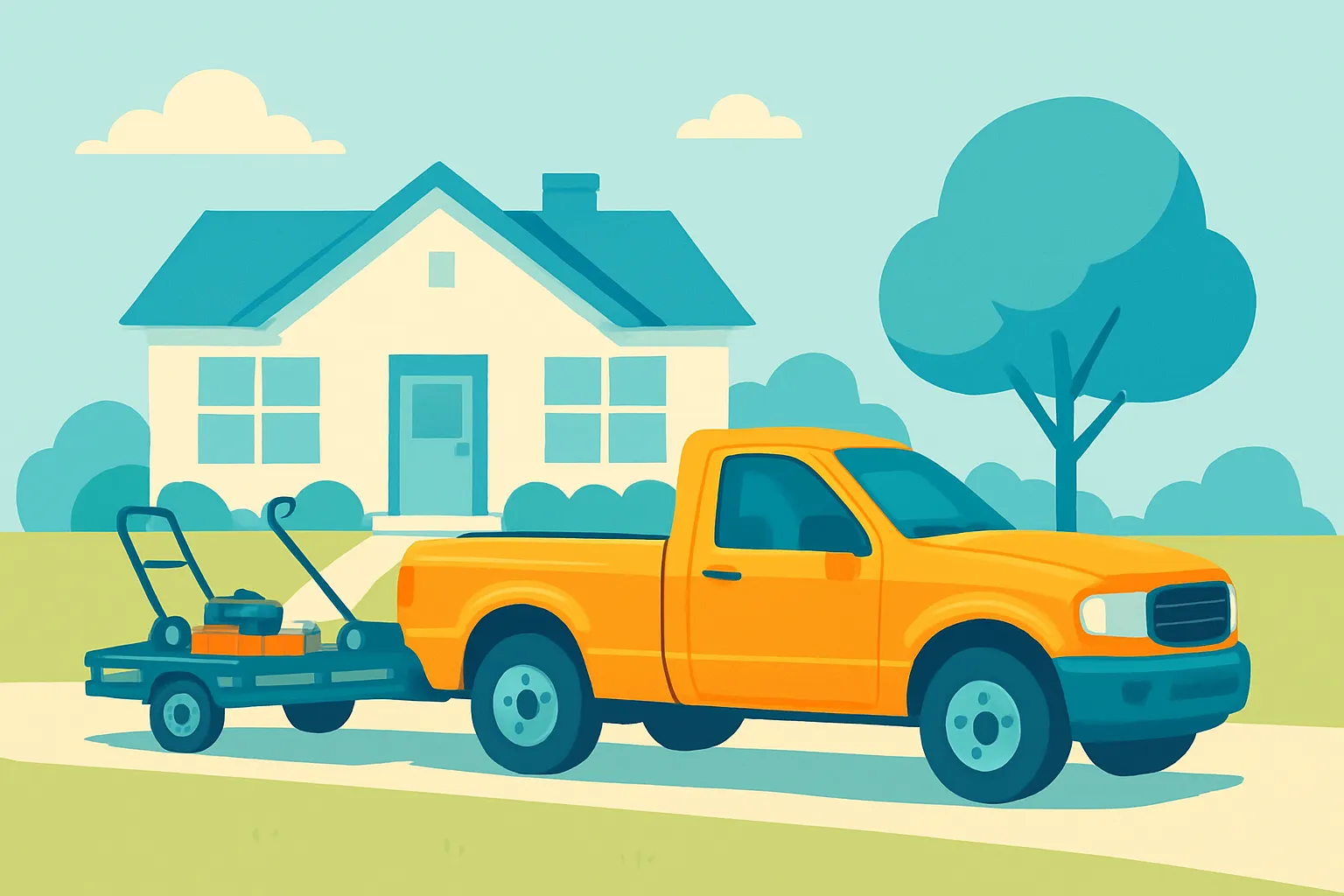
If your business owns, leases, or rents vehicles used for work (pickup trucks, vans, box trucks, or trailers carrying mowers), you should have a commercial auto policy that names the business as insured. Personal auto policies are for personal driving and typically exclude vehicles owned by a business or used primarily for work. Situations that normally trigger the need for commercial auto insurance:
- Your business owns or leases any vehicle registered to the business.
- An employee regularly drives a vehicle for business (unless you buy HNOA—see next section).
- You haul equipment or customers (passenger-carrying exposures, heavier trailers, or commercial loads). Certain uses change the policy type and legal limits. State rules and registration classifications differ — some states require commercial registration for work trucks over certain weights or with commercial plates; others rely on insurance forms and use. Check your state Department of Motor Vehicles or Department of Insurance if you’re unsure. (content.naic.org)
What does commercial auto insurance cover for landscapers?
A business auto policy (BAP) covers liabilities arising from auto use in the business and may include physical damage (collision and comprehensive) and medical payments, depending on your choices. Key parts landscapers rely on:
- Liability for bodily injury and property damage to third parties.
- Physical damage (collision and comprehensive) for business-owned vehicles.
- Medical payments or personal injury protection (where available).
- Coverage for autos “scheduled” (listed) on the policy and fleet limits; you can add coverage symbols for autos taken home by employees. Many client contracts require commercial auto liability with specified limits and a certificate of insurance showing the client as an additional insured or certificate holder. Ask the client for the exact wording on limits and additional-insured requirements — vague certificates can lead to disputes. See the internal guide on whether to insure mowers and trailers separately for help deciding if equipment needs separate inland marine or scheduled equipment coverage. Should landscapers insure mowers and trailers separately
When is hired-and-non-owned auto (HNOA) enough for a landscaper?
HNOA (or non‑owned auto liability) protects your business when employees use their personal vehicles on company business or you rent vehicles temporarily. It does not cover physical damage to those personal vehicles — workers’ personal policies or rental-company insurance handle that. For many small landscapers who occasionally run errands or visit clients in an employee’s car, HNOA plus clear driver policies can be a cost‑effective option. Use HNOA when:
- Employees occasionally use personal cars for business errands and you don’t own business vehicles. Do not rely on HNOA if:
- You own the vehicle, regularly attach trailers or heavy equipment, or carry passengers for hire. In those cases a business auto policy is usually required.
How much does commercial auto insurance cost for landscapers?
Commercial auto premiums vary widely by vehicle type, usage, driver records, state and chosen limits. Benchmarks (as of the dates shown):
- MoneyGeek’s national benchmark for minimum commercial auto coverage is about $163 per month ($1,959/year). This is a modeled national average across vehicle types and industries.
- NerdWallet reports an average around $147 per month based on a market source (Insureon); other sources use different samples and methods. Expect differences because vehicle mix, how many miles you drive, driver records and state all move the number significantly. (nerdwallet.com) Why estimates vary: MoneyGeek models multiple vehicle types and coverage-baseline assumptions; other publishers sample different provider mixes. For a pickup that tows heavy equipment your premium will be different than a sedan used rarely for client calls. Use these benchmarks only to set expectations — get at least three quotes tailored to your exact vehicles and driving profiles. For an owned truck that carries mowers and a trailer, expect higher premiums than a car used only intermittently. If you own five or more vehicles used for business, underwriting rules and pricing change further. The IRS and accounting rules also treat multiple business vehicles differently for tax purposes. (irs.gov) For a deeper look at overall landscaper insurance budgets and averages (general liability, workers’ comp and property), see the internal cost overview. How much does landscaper insurance cost per year — averages
Commercial auto vs. other business coverages — quick comparison table
| Coverage | What it covers | Who needs it | Typical trigger |
|---|---|---|---|
| Business auto policy (BAP) | BI/PD liability for business-owned autos; physical damage if purchased | Businesses owning or leasing vehicles used for work | You own or register a vehicle to your business, or use vehicles primarily for work. |
| Hired & Non‑Owned Auto (HNOA) | Liability for employees using personal cars or rented vehicles on business | Businesses that don’t own vehicles but have employees driving personal cars for errands | Employee causes an accident while running a business errand; you rented a vehicle for business. |
| Trailer/scheduled equipment coverage | Physical damage to trailers and attached equipment; inland marine for mobile tools | Landscapers hauling mowers, chipper/shredders, or heavy trailers | Equipment dropped, stolen, or damaged in transit; separate scheduling often needed. (iii.org) |
| Commercial umbrella | Extra liability limit above auto and general liability | Businesses with higher third‑party exposure or contract requirements | Claim exceeds primary auto or GL limits. |
| Personal auto policy | Personal BI/PD for non-business driving; limited business use endorsement sometimes available | Individuals using car mainly for personal driving | Personal commuting and errands; many exclude business use. (iii.org) |
How to buy and compare commercial auto policies (practical steps)
- List each vehicle: year, make/model, VIN, gross vehicle weight, who drives it, usual radius and purpose (hauling equipment, passenger transport). Underwriters price on these exact factors.
- Decide the coverages you need: liability limits (consider $1,000,000 CSL for high‑exposure businesses per industry guidance), collision/comprehensive for owned vehicles, HNOA for employee cars, and physical damage for trailers/equipment.
- Ask for endorsements you likely need: hired-car coverage, non-owned liability, loading/unloading coverage, pollutant clean-up (if you haul fertilizer/chemicals), and employer’s non-ownership liability.
- Get at least three quotes from agents who underwrite small-business fleets and ask for a rate sheet that shows which factors most affect cost. Use the SBA’s small‑business counseling resources if you need help comparing carriers. (legacy.sba.gov)
- Review exclusions carefully: many personal policies exclude commercial use; some commercial policies exclude certain equipment types unless scheduled. If a client contract specifies minimum limits, confirm your policy and certificate meet the exact wording. Practical example: If you run a two‑truck landscaping crew that tows mowers and a chipper, schedule both trucks on a BAP with physical damage, list trailers and high-value mowers on inland marine or scheduled equipment, and carry HNOA only if employees occasionally use personal cars for pickups. That combo closes the common coverage gaps most landscapers face. (Hypothetical example.)
Common mistakes landscapers make with vehicle coverage
- Relying on personal auto policies for business use (they often exclude business use and won’t protect the business).
- Forgetting to insure trailers, chippers and mowers being towed — these are often excluded unless scheduled or covered by inland marine. Should landscapers insure mowers and trailers separately
- Using vague COI language that doesn’t actually name the client as an additional insured with the right endorsement language. Confirm exact certificate wording before you sign a contract.
- Assuming a high personal umbrella will answer business auto claims — many personal umbrellas exclude business-related auto claims. Confirm coverages carefully. If you hire employees, check how auto exposure interacts with workers’ compensation and payroll rules; for that intersection see our guide on workers’ compensation for landscapers. Do landscapers need workers' compensation insurance
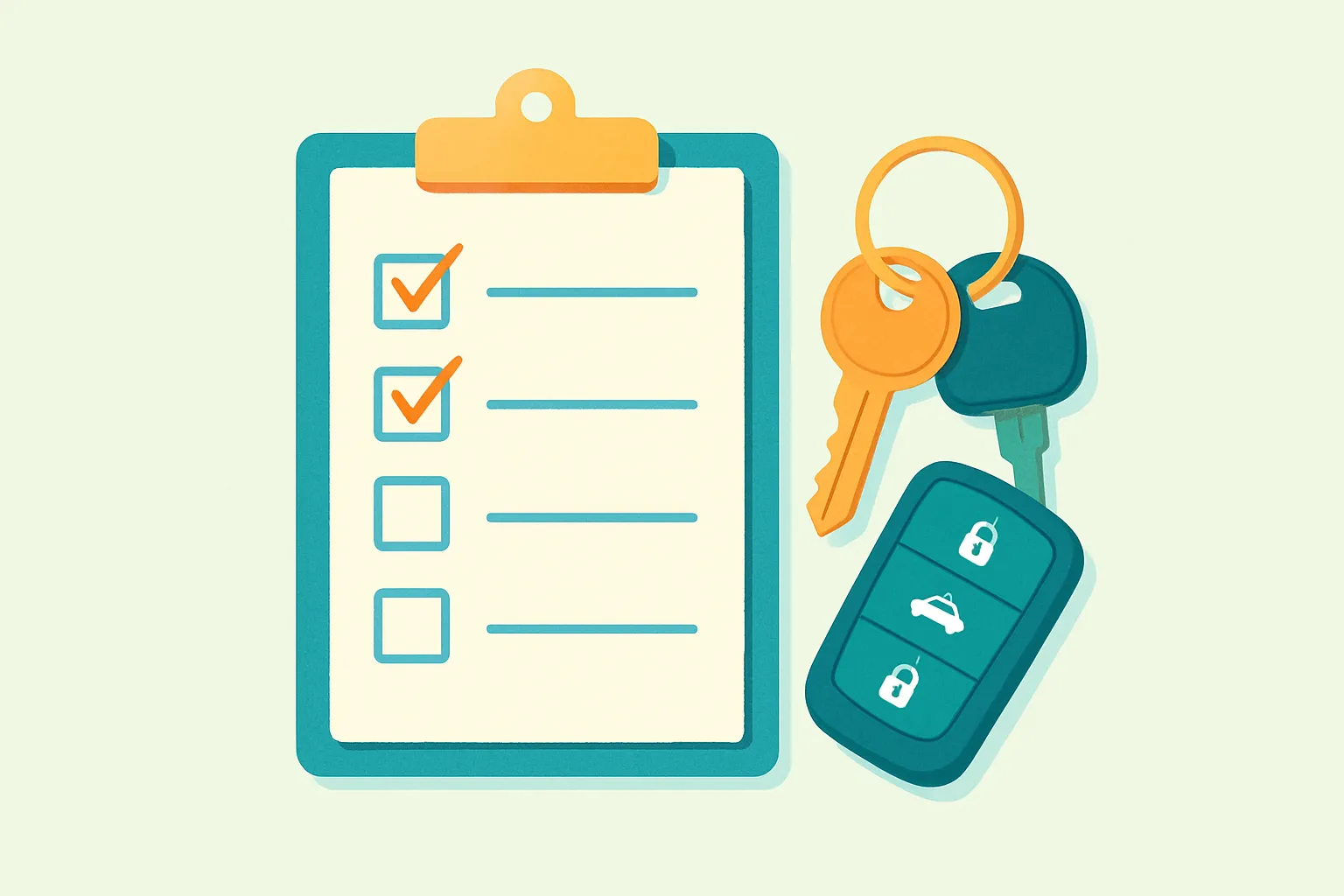
Decision checklist: do you need commercial auto insurance?
- Do you own or lease any vehicle registered to the business? → Yes = commercial auto likely required.
- Do employees regularly drive for business or haul equipment? → Yes = BAP or HNOA (if employees use personal vehicles) needed.
- Do you tow trailers, mowers or heavy equipment? → Yes = schedule equipment or get inland marine/physical damage coverage.
- Does a client or municipality require specific limits and additional insured wording? → Yes = confirm policy language and certificate wording with your agent.
If you answered “yes” to any of the above, gather vehicle and driver details and get tailored quotes.
Questions to ask your agent (exact wording to use)
- “Do my personal auto policies exclude any vehicle owned or registered to the business?”
- “What coverage symbol will cover an employee taking a scheduled truck home overnight?” (ask for the declarations page example).
- “Can you show the exact COI wording my commercial client requires and confirm we can provide it?”
- “How are trailers, mowers and mounted equipment covered — do they need to be scheduled separately or added by endorsement?”
- “If an employee uses a personal vehicle for business, will hired-and-non‑owned cover this, and does it defend the company in addition to indemnifying?”
How vehicle insurance affects taxes and recordkeeping
If you use personal vehicles for business or own several business vehicles, keep detailed mileage and expense records. The IRS lets you use the standard mileage rate or actual expense method for business use; check current rates and rules before you deduct. For the optional standard mileage rates and recordkeeping rules, consult IRS guidance. Good records also matter when you file claims or defend against a client dispute about scope of work or vehicle responsibility.
Frequently asked questions
Do personal auto policies ever cover business driving?
Sometimes—but not reliably. Personal policies may allow limited business errands, but they usually exclude vehicles owned by a business or vehicles used primarily for work. Always verify with your insurer, and don’t assume a personal umbrella will fill gaps.
If I occasionally rent a truck, do I need commercial auto?
If rentals are occasional, the rental company’s policy and your HNOA/non‑owned coverage can work. If you rent frequently or for commercial loads, buy hired-car or a business auto policy. Confirm limits and physical damage options.
What liability limit should a landscaper carry on autos?
There’s no one‑size‑fits‑all number, but many insurers and industry guides recommend carrying higher limits (e.g., $1,000,000 combined single limit) for businesses with regular public exposure. Ask your agent whether that limit makes sense for your client contracts and risk.
Will an umbrella policy protect my business from auto claims?
A commercial umbrella can increase limits above your primary auto policy, but it only applies if the underlying auto policy is an eligible covered policy and meets the umbrella’s terms. Check exclusions and underlying limit requirements carefully.
Bottom line
If your landscaping business owns, leases or regularly uses vehicles for work, buy a commercial auto policy tailored to each vehicle and add HNOA if employees use personal cars. Use the decision checklist and the agent questions above, get multiple quotes, and confirm trailer/equipment scheduling and certificate wording before you sign contracts. For related coverages, review your general liability needs How much general liability insurance does a landscaper need, workers’ comp obligations Do landscapers need workers' compensation insurance, and equipment scheduling Should landscapers insure mowers and trailers separately. Rules and minimums vary by state — confirm specific legal or contract requirements with your licensed agent and your state Department of Insurance.
Sources
- iii.orgiii.org
- moneygeek.commoneygeek.com
- content.naic.orgcontent.naic.org
- nerdwallet.comnerdwallet.com
- irs.govirs.gov
- iii.orgiii.org
- iii.orgiii.org
- legacy.sba.govlegacy.sba.gov

Stephanie Mitchell has 20 years of experience researching and explaining business insurance topics for small business owners. About the author · Editorial standards