Table of contents
- Key takeaways
- What is inland marine insurance and what does it cover for landscapers?
- What does commercial property insurance cover for landscaping businesses?
- When should a landscaper buy inland marine vs commercial property?
- How do inland marine and commercial property treat tools, mowers and trailers differently?
- What affects the cost of inland marine vs commercial property for landscapers?
- How do state rules, contracts and clients change what you need?
- How to buy and compare inland marine and commercial property policies?
- Decision checklist — do you need inland marine, commercial property, or both?
- Frequently asked questions
- Bottom line
Short answer: inland marine (often sold as a tools & equipment floater or contractors’ equipment policy) protects your mobile gear — mowers, trimmers, trailers and materials — in transit, at jobs, or temporarily off‑premises. Commercial property (or a Business Owner’s Policy/BOP) covers a fixed location — your shop, storage building, and the business personal property kept there, plus business‑interruption losses tied to that address. Most landscapers need both: commercial property for a shop or storage building, and inland marine for the mobile, jobsite‑exposed assets that let you work. This article explains the practical difference, when one policy applies but the other doesn’t, how costs are set (and what data exists), a decision checklist, real‑world examples, and exact questions to ask your agent. (iii.org)

Key takeaways
- Inland marine covers movable property in transit or at third‑party sites; commercial property covers buildings and contents at a fixed address.
- Landscapers who keep equipment on trailers or work at many client sites almost always need inland marine in addition to a BOP or commercial property policy. (nerdwallet.com)
- Costs vary widely by equipment value, theft risk, crew size and location; concrete median premium data exists for general liability and business property but not a useful national “inland marine average.” Explain pricing drivers to your agent.
- Common gaps: theft from an unattended vehicle, mechanical breakdown, pollution (pesticide spills), and “tools excluded” endorsements — inspect policy forms and endorsements closely. (insurancejournal.com)
What is inland marine insurance and what does it cover for landscapers?
“Inland marine” used to refer to goods moved by ship, but now it means coverage for movable or specialized property vulnerable while transported or temporarily stored away from your main premises. For landscapers that usually means contractors’ equipment coverage (tools & equipment floater), transit coverage, and installation floaters for materials you deliver and install. Typical triggers are theft from a jobsite or trailer, collision damage while hauling a mower, or loss while equipment sits at a client’s property. The Insurance Information Institute explains that inland marine covers property while transported over land or temporarily warehoused by a third party. Common inland marine forms relevant to landscapers
- Contractors’ equipment (tools & equipment floater): scheduled or blanket coverage for owned equipment, usually “all risks” subject to listed exclusions.
- Transit coverage: protects items while moving between locations.
- Installation floater: covers materials in transit and during installation until work is finished. Useful if you install irrigation, hardscape or plantings. (content.naic.org)
What does commercial property insurance cover for landscaping businesses?
Commercial property policies — and BOPs that bundle property with general liability — cover your building(s), permanently stored business personal property (shop tools left inside), and often business‑interruption losses tied to damage at that insured location. SBA guidance lists commercial property as the policy small businesses use to cover land, buildings, inventory and equipment kept at a business site. A BOP is common for small landscaper offices or shops because it pairs property with liability in one package. (sba.gov) What commercial property usually does NOT cover (you’ll need endorsements or separate policies)
- Items you take to job sites or leave on trailers — those are classic inland marine exposures.
- Flood and earthquake losses (unless added).
- Wear‑and‑tear or mechanical breakdown (consider equipment breakdown coverage).
When should a landscaper buy inland marine vs commercial property?
Ask where the property spends most of its time. If it lives on a trailer, in vehicles, or moves between clients, inland marine is the right fit. If it sits inside a secured shop or storage building at a single address, commercial property (or a BOP) covers it. Practical examples
- You keep a zero‑turn mower locked in a storage shed behind your shop: commercial property will respond if the shed is insured and the loss is from a covered peril.
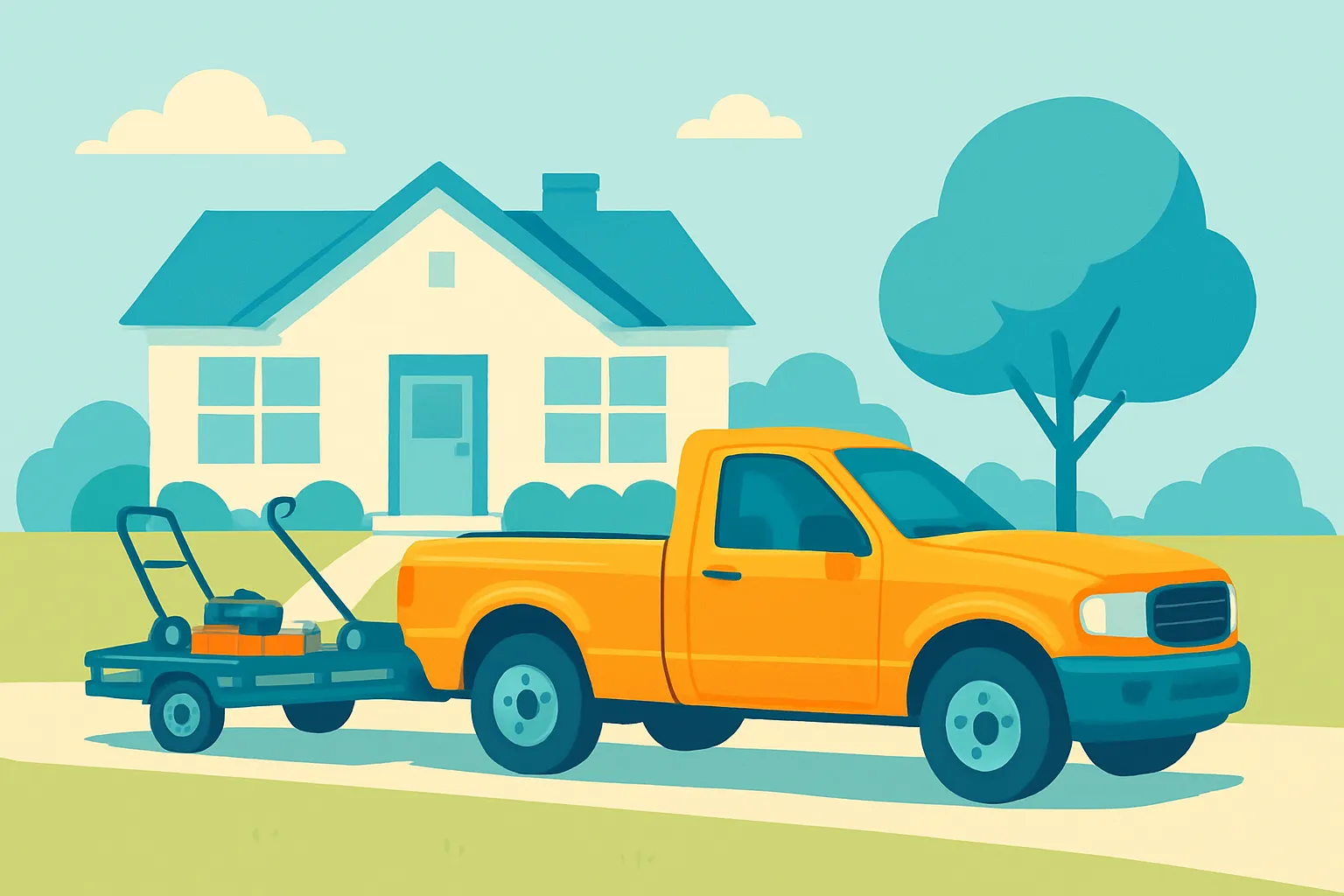
- You haul that mower to jobs every day and sometimes leave it overnight on an attached trailer: inland marine covers the transit and jobsite exposure that a commercial property policy usually excludes. Say you run a two‑person lawn‑care business that stores older trimmers in a rented garage but leaves the large mower on a trailer overnight at a client site. If the trailer is broken into and the mower stolen, a commercial property policy for the garage owner won’t help you — inland marine or a contractors’ equipment floater is what replaces the mower.
How do inland marine and commercial property treat tools, mowers and trailers differently?
Comparison table — what each policy typically covers and when it pays
| Coverage | What it covers | Who needs it | Typical trigger |
|---|---|---|---|
| Commercial property / BOP | Buildings, permanently stored contents, shop tools stored inside, business interruption tied to that location. | Landscapers with a fixed shop or storage address. | Fire, vandalism or theft from the insured building; covered perils at that location. |
| Inland marine (tools & equipment floater / contractors’ equipment) | Mobile tools, mowers, rented equipment, materials in transit, equipment at job sites or third‑party locations. | Mobile landscapers, crews using trailers and doing installs. | Theft from a trailer, collision while hauling, loss at a client site. |
| Installation floater | Materials intended to become part of a permanent installation (irrigation parts, hardscape materials) during transit and install. | Landscapers who deliver and install materials. | Damage or loss before materials are fully installed. |
| Key point: trailers used for transport can be insured by inland marine for the contents and by commercial auto for physical damage to the trailer when attached to a vehicle; check how your commercial auto and inland marine forms interact. | |||
 |
What affects the cost of inland marine vs commercial property for landscapers?
There isn’t a reliable national “average inland marine premium” you can quote — inland marine pricing is highly itemized and depends on the value and schedule of individual pieces of equipment. By contrast, there are published median figures for some broader business insurance lines you’ll also buy. Concrete pricing references (useful benchmarks)
- NerdWallet reports a median annual cost for general liability for landscapers of $1,400, and a median workers’ compensation bill of about $4,000 per year — useful background when budgeting overall insurance costs.
- NerdWallet (via Insureon) also notes that median business property insurance costs roughly $108 per month, which illustrates that location‑based property has a clearer pricing benchmark than inland marine. As of October 2026, NerdWallet/Insureon data. (nerdwallet.com) Primary inland marine pricing drivers
- Total scheduled value of equipment: insurers price based on the replacement value you list.
- Theft/crime and weather risk in your service area: higher theft or severe‑weather exposure ups premiums.
- Whether coverage is scheduled (per item) or blanket (a single limit for all tools) — scheduling high‑value items avoids aggregate shortfalls but can raise the price.
- Age and condition limitations: many inland marine forms depreciate older equipment or limit coverage to newer items unless endorsements are added. Why insurers price commercial property differently
- Building construction, fire protection (proximity to hydrants), business interruption exposure, and whether you choose replacement‑cost vs actual‑cash‑value for contents. NerdWallet explains how building and location drive commercial property pricing.
How do state rules, contracts and clients change what you need?
State rules: licensing, workers’ comp and bonding are state‑specific. For coverage distinctions between inland marine and commercial property, forms are generally national, but regulators and accepted policy forms can vary by state. NAIC and state departments manage approvals and variations in forms; if you need a state‑specific ruling (for example about whether a specific inland marine endorsement is allowed), check your state’s department of insurance. (content.naic.org) Contract and client requirements
- Many commercial clients and municipal contracts require certificates of insurance listing specific coverages and limits, and often ask that you add the client as an “additional insured” on your general liability. For operations that bring equipment onto a client’s property, the client will typically expect inland marine or proof that your property and auto coverage will respond. See the SBA’s guidance on required coverages for contractors and small businesses. Lender and lease clauses
- If you finance equipment, lenders often require you to insure it — inland marine is the usual policy type to satisfy a lender’s collateral protection requirement. If you lease space for storage, the lease could require commercial property coverage naming the landlord as loss payee. Check your contracts and point them to your agent.

How to buy and compare inland marine and commercial property policies?
Steps to compare quotes and avoid coverage gaps
- Inventory and document everything: make a schedule of high‑value items (serial numbers, photos, purchase dates, replacement cost). Inland marine quotes need this.
- Decide scheduled vs blanket limits: schedule items if they’re high‑value (riders for each), or choose a blanket limit for many small tools. Be explicit about sublimits for theft from unattended vehicles.
- Check interaction with commercial auto: trailers and tools in vehicles can sit in a grey area — confirm how your commercial auto policy vs inland marine responds to a theft while a truck is en route.
- Ask about mechanical breakdown and equipment‑away endorsements: inland marine often excludes wear‑and‑tear — you may want separate equipment breakdown or maintenance contracts.
- Get certificate wording right: if a client or landlord requires additional insured or waiver of subrogation, get precise policy language and exact certificate wording before signing contracts. SBA and industry guides stress matching contract requirements to policy language. How to compare carriers and forms
- Request sample policy forms and the exact endorsements that would apply to your main exposures (theft from trailer, materials in transit, business interruption). Compare exclusions side‑by‑side; don’t rely only on premium. The Insurance Journal recommends checking per‑item vs blanket definitions and specific exclusions.
Common mistakes landscapers make when buying these policies?
- Assuming the BOP covers everything mobile. A BOP’s property section generally covers things at the insured premises — not tools left overnight on a trailer; inland marine is the right fit for mobile gear.
- Not scheduling high‑value items: a blanket limit can be eaten by several losses; scheduling ensures full replacement of expensive mowers or attachments.
- Overlooking exclusions: pollution, mechanical breakdown, and theft from unattended vehicles are frequent gaps. Inspect endorsements and ask for specific wording.
- Missing contract wording: additional insureds, waivers of subrogation and certificate language must match policy wording — otherwise a certificate is worthless. SBA guidance underscores aligning contracts with coverage.

Decision checklist — do you need inland marine, commercial property, or both?
- Do you have a fixed shop/storage building you’d rebuild if it burned? → Commercial property / BOP.
- Do you regularly haul mowers, leave tools overnight on trailers, or store materials at client sites? → Inland marine / contractors’ equipment floater.
- Do you install irrigation, hardscape, or materials that become part of a client’s property? → Consider an installation floater.
- Do contracts or lenders require equipment insurance or naming you as additional insured? → Match the required policy and exact certificate language. Hypothetical scenarios
- Small crew, no shop, everything on trailers: primary owner risk is theft or damage in transit — inland marine is essential; a small BOP isn’t enough. (Hypothetical.)
- Larger shop with an office, lots of on-site inventory and seasonal employees: both a BOP/commercial property and inland marine for off‑site gear make sense. (Hypothetical.)
Questions to ask your agent (exact phrasing to use)
- “Will my commercial property policy cover tools left on a trailer overnight? If not, what specific inland marine form covers that exposure?”
- “Can you show me the exact endorsement that covers theft from an unattended vehicle and any related sublimits?”
- “Do you recommend scheduling these items or using a blanket limit? What would the scheduled replacement cost be?”
- “If a client requires me to be additional insured or waive subrogation, can you show the exact policy wording you would provide?”
- “If my mower is financed, will this inland marine policy satisfy the lender’s collateral insurance requirement and name them as loss payee?”
Frequently asked questions
Do I need inland marine if I have a BOP?
Yes if you use equipment away from the insured premises. A BOP covers the premises and on‑premises contents; inland marine covers items while in transit or at client sites. Ask your carrier whether your BOP includes any limited off‑premises coverage and read exclusions.
Will my commercial auto insurance cover tools in my truck?
Commercial auto typically covers physical damage to the vehicle and may offer limited coverage for cargo; it usually won’t replace non‑permanently‑affixed tools or equipment if they’re stolen from a trailer or jobsite — that’s inland marine territory. Confirm with both carriers to avoid overlap gaps.
Does inland marine cover mechanical breakdown of a mower?
No — inland marine covers loss from covered perils (theft, collision, vandalism, fire) but generally excludes mechanical breakdown and wear‑and‑tear. You’d need equipment breakdown coverage or a service contract for those risks.
Can I insure a rental mower or leased equipment?
Yes — inland marine can be written to cover equipment you lease or rent, but wording and limits differ. Insurers often offer “leased or rented equipment” options; read your policy’s definitions.
Bottom line
For landscapers, inland marine and commercial property serve different, complementary roles: use commercial property or a BOP to protect a fixed shop and its on‑site contents, and buy inland marine (tools & equipment floater / contractors’ equipment) to protect the gear that moves with you. There’s no one‑size‑fits‑all price for inland marine — prepare a detailed equipment schedule, get sample policy forms and endorsements, and ask the exact certificate wording your clients or lenders require. Start by inventorying your high‑value items, gathering contract insurance requirements, and asking the agent the checklist questions above; that prepares you to get apples‑to‑apples quotes and avoid the most common gaps. External resources and further reading
- Insurance Information Institute — Understanding inland marine insurance: iii.org.
- U.S. Small Business Administration — Get business insurance: sba.gov.
- Insurance Journal coverage of contractors’ equipment floater and markets: insurancejournal.com.
- NAIC reference to inland marine/installation floater forms: content.naic.org.
- NerdWallet — landscaper insurance costs and what covers tools: nerdwallet.com.
- OSHA — landscaping hazards and jobsite safety guidance: osha.gov. (osha.gov)
- Bureau of Labor Statistics — industry injury and fatality tables (landscaping services): bls.gov. (bls.gov) Questions to your agent, a clear equipment list, and matching policy forms to client contract language are the quickest ways to close protection gaps. Use the decision checklist above and link your quote requests to the exact forms and endorsements you’ll need to produce for clients or lenders. Do landscapers need workers' compensation insurance, Does a Landscaping Contractor Need Commercial Auto Insurance, How much does landscaper insurance cost per year — averages and How much general liability insurance does a landscaper need.
Sources
- iii.orgiii.org
- nerdwallet.comnerdwallet.com
- insurancejournal.cominsurancejournal.com
- NerdWalletnerdwallet.com
- content.naic.orgcontent.naic.org
- sba.govsba.gov
- content.naic.orgcontent.naic.org
- osha.govosha.gov
- bls.govbls.gov

Stephanie Mitchell has 20 years of experience researching and explaining business insurance topics for small business owners. About the author · Editorial standards