Table of contents
- Key takeaways
- What insurance is required for post-construction cleaning companies?
- What coverage types do post-construction cleaners need?
- How much does insurance for post-construction cleaning companies cost — and what affects price?
- Do contractors and clients require certificates, additional insureds, or waivers of subrogation?
- How does workers’ compensation apply to post-construction cleaners?
- How to buy and compare insurance for a post-construction cleaning company?
- Common mistakes post-construction cleaners make when buying insurance
- Decision checklist: what to buy first and why
- Frequently asked questions
- Bottom line
You need at least general liability, commercial auto (if you drive for jobs), and—if you have workers—workers’ compensation. Post‑construction cleaning often also needs tools/equipment (inland marine) coverage, a janitorial bond for commercial contracts, and higher limits or an umbrella if a general contractor asks. Below you’ll find which policies are required vs. recommended, how client and GC contracts change what insurers must provide, what drives price, how to buy and compare coverage, plus a practical decision checklist and questions to bring to your agent.

Key takeaways
- At minimum: General liability — clients treat it as essential; many GCs ask for $1M/$2M limits and additional‑insured endorsements. (moneygeek.com)
- If you or your crew do paid work, most states require workers’ compensation; contractors often demand proof even when the legal threshold is higher. (content.naic.org)
- Tools and mobile equipment aren’t reliably covered by a BOP—consider inland marine (tools & equipment) or a scheduled property endorsement. (iii.org)
- Commercial auto and bond requirements are common for post‑construction jobs; the SBA has a surety‑bond program for small firms that need contract bonds. (sba.gov)
- Typical starter package costs vary by state and operations; MoneyGeek’s modeled “starter bundle” benchmark is about $293/month.
What insurance is required for post-construction cleaning companies?
There’s no single federal rule forcing every cleaning company to carry every policy. Requirements come from three places: state law, client/contract terms, and the risks you create at job sites.
- State law: Most states mandate workers’ compensation once you pay wages to employees; triggers and exemptions vary by state. Check your state insurance department for the rules where you operate.
- Client/contract terms: GCs, building owners and property managers often require a Certificate of Insurance (COI), GL with limits such as $1,000,000 per occurrence/$2,000,000 aggregate, commercial auto if you’ll be on site with a vehicle, and sometimes a performance/payment bond for larger, public or institutional contracts. These are contract requirements, not new laws. (insurancejournal.com)
- Lenders/landlords: If you lease space for equipment or store client property, landlords may require commercial property or a BOP and proof of insurance. (content.naic.org)
Because rules differ by state and contract, read each contract’s insurance section line‑by‑line before you sign and verify state law through your state DOI.
What coverage types do post-construction cleaners need?
Below is a practical list tied to the hazards of post‑construction cleaning (dust, debris, high‑value finishes, heavy vacuums/steamers, ladders and subcontractors).
Comparison: common coverages for post‑construction cleaning
- General liability — Covers third‑party bodily injury, property damage, and legal defense. Who needs it: every cleaning business that enters client premises. Trigger: client contracts, slip‑and‑fall or accidental damage claims. Typical GC requirement: $1M per occurrence / $2M aggregate.
- Workers’ compensation — Covers medical and wage benefits for on‑the‑job injuries. Who needs it: employers with employees (state thresholds vary). Trigger: hiring any W‑2 staff; required by state law.
- Commercial auto — Covers liability and physical damage for vehicles used in business. Who needs it: operations that transport crews/equipment. Trigger: travel to/from jobs. See hired/non‑owned rules for contractors.
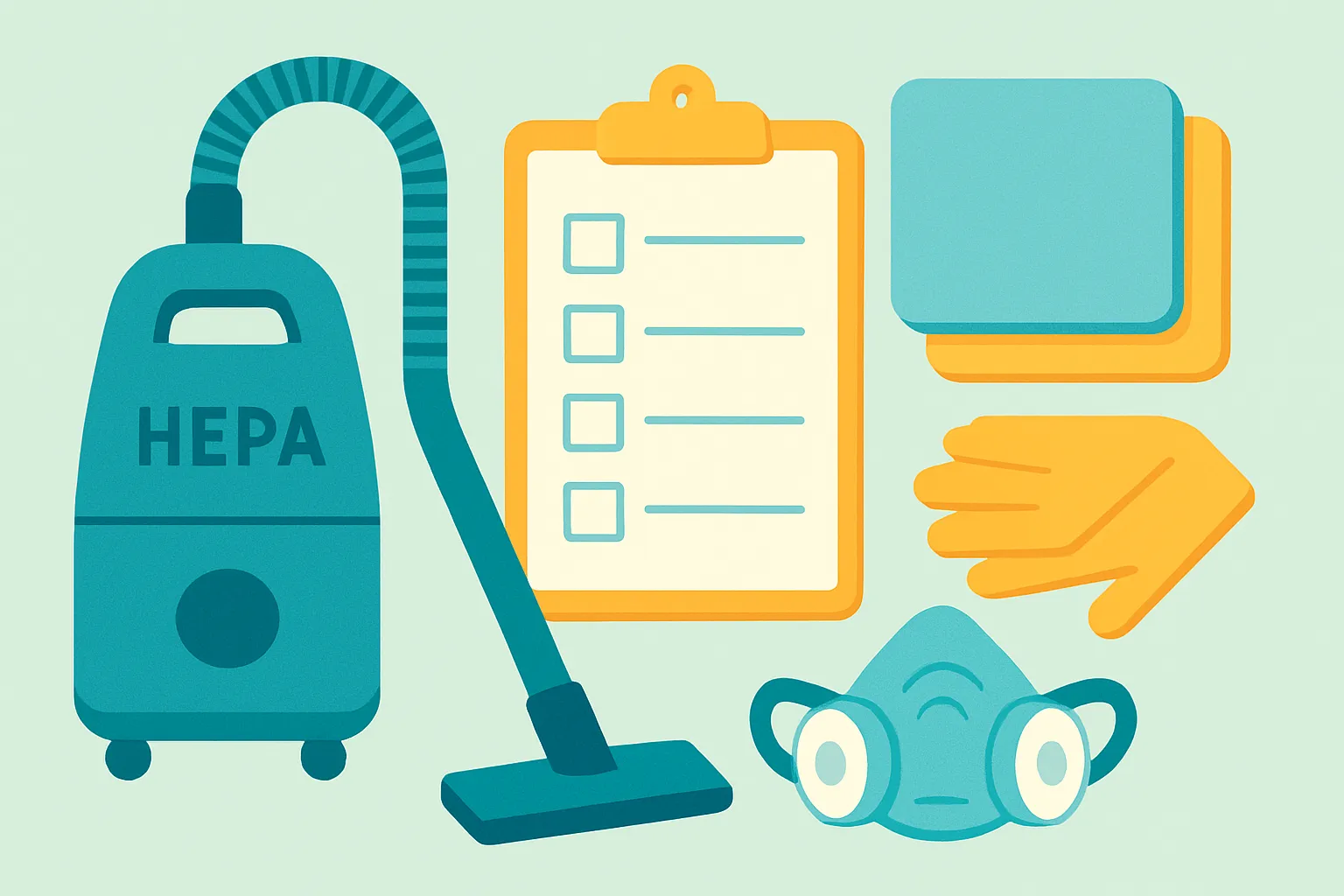
- Inland marine / tools & equipment — Covers theft or damage to mobile tools and equipment off‑premises. Who needs it: teams with vacuums, floor machines, HEPA systems, or any high‑value equipment. Trigger: equipment stolen from a van or job site.
- Janitorial/commercial bond (fidelity or contract bond) — Covers client losses from employee theft (fidelity) or guarantees contract completion (performance/payment bonds). Who needs it: many commercial accounts, government contracts and property managers require bonding.
- Umbrella / excess liability — Adds limits above your primary GL and auto. Who needs it: firms on larger commercial projects or with expensive finishes. Trigger: suits that exceed primary limits.
- Pollution/Environmental liability (limited) — Covers accidental release of hazardous cleaning agents or solvent contamination. Who needs it: those using industrial chemicals or doing deep cleaning that may disturb contaminants. Trigger: chemical spill or contamination claim; policies often need specific endorsements.
- Businessowners Policy (BOP) — Combines GL + property and often business interruption; useful if you store equipment or operate from a leased space. Who needs it: small companies with a fixed location.
For more on bonds vs. general liability for cleaning businesses, see our internal piece on janitorial bond vs general liability. Link it where relevant in your procurement packets.
How much does insurance for post-construction cleaning companies cost — and what affects price?
Premiums depend on state, payroll, vehicles, claims history and the type of cleaning you do. Insurers underwrite differently, so don’t accept a single quote as “the market.”
Benchmarks and common figures (use to sanity‑check quotes)
- MoneyGeek’s modeled national benchmark: a “starter bundle” (GL + commercial auto + janitorial bond) averages about $293 per month; adding workers’ comp pushes a “growing” bundle to around $466/month. These are modeled estimates and vary by state and operations.
- NerdWallet reports a typical GL policy for janitorial businesses near $750/year and notes workers’ comp can run higher depending on payroll. Use these figures as order‑of‑magnitude checks, not guarantees. (nerdwallet.com)
Key price drivers
- Payroll and employee count: workers’ comp is priced on payroll and classification codes; adding staff is often the single biggest premium jump.
- Vehicle use and number of vehicle days: commercial auto rates rise with more vehicles and higher mileage.
- Type of work: post‑construction cleaning exposes crews to dust, silica, and active sites—underwriters charge more for higher physical and chemical risk.
- Claims history and loss control: documented safety programs, driver‑screening, PPE, and written procedures reduce rates over time.
Hypothetical scenario that uses market benchmarks
- Example: a two‑person post‑construction crew that visits finished office suites, owns one van and a $6,000 HEPA vacuum, and hires a W‑2 helper. Using MoneyGeek’s benchmarks as a rough guide, a minimum bundle (GL + auto + bond) might land near the modeled $293/month; adding workers’ comp for one employee can move you toward the $466/month “growing” bundle. Use those numbers only to compare the quotes your agent brings back.
For a deeper cost breakdown at different business sizes, see our internal post How Much Does Cleaning Business Insurance Cost?.
Do contractors and clients require certificates, additional insureds, or waivers of subrogation?
Yes—contract language often dictates what insurance you must buy.
- Certificates of Insurance (COIs): the standard way to show coverage and limits. GCs and property managers typically request a COI before you start work. Many bids and audits get rejected without one.
- Additional Insured endorsements: GCs commonly ask to be named as an “additional insured” on your GL policy; that extends certain protection to them if a claim arises from your work. Some carriers offer limited or “primary/non‑contributory” versions—read endorsements carefully.
- Waiver of Subrogation: clients may ask your insurer to waive subrogation so your carrier can’t pursue the client after paying a claim. Carriers grant this when the endorsement is purchased or added.
Turn contract insurance sections into a checklist: limits per occurrence and aggregate, required additional insured language, waiver of subrogation, certificate holder name and wording, effective dates covering the project, and whether the client needs evidence of primary/non‑contributory wording. If you use subcontractors, require COIs from them as well—see our guide on insuring subcontractors for a cleaning company.
How does workers’ compensation apply to post-construction cleaners?
If you pay employees, workers’ comp is usually mandatory. State rules vary on thresholds, exemptions for owners/partners, and payroll reporting. The NAIC and state DOI explain that workers’ comp protects employers from costly employee lawsuits and covers medical care and wage replacement.
Practical steps
- Check your state DOI for whether owners can opt out and what payroll triggers apply.
- Classify employees correctly: janitorial work often uses different classification codes than general labor; misclassification can lead to audits and retroactive premiums.
- If you subcontract, determine whether the contract requires the sub to carry its own comp policy or whether the GC will insist you ensure coverage. Our internal explainer Do Residential Cleaners Need Workers’ Comp? covers classification and employer obligations.
How to buy and compare insurance for a post-construction cleaning company?
Follow a repeatable buying process so you compare apples to apples and protect your margins.
-
Inventory exposures and assets
- List employees (W‑2 vs. subs), vehicles (VINs, annual mileage), high‑value equipment (purchase price, serials), and the types of sites you service (occupied office, retail, multi‑family, hospitals). This controls classification and inland marine needs.
-
Convert contract requirements into insurance specs
- Extract required per‑occurrence and aggregate limits, additional insured wording, waiver of subrogation, and COI holder details. Share this with agents verbatim.
-
Request comparable quotes
- Ask three agents or carriers for quotes using the same limits, deductibles and endorsements. Compare premium, carrier financial strength and how easy it is to add additional insureds or issue COIs.
-
Negotiate limits and endorsements
- If a GC requires very high limits, ask whether you can add a commercial umbrella rather than doubling primary limits—this often saves premium while meeting contract needs.
-
Document risk control
- Implement driver‑screening, PPE and documented jobsite safety checklists—insurers reward lower claims frequency with better renewals.
-
Maintain COI and certificate tracking
- Keep current COIs for all active contracts and subs; renew and reissue as contracts extend. Consider software or a shared folder for audit readiness.
For details about vehicle cover and hired/non‑owned exposure, read our post Does Hired Non‑Owned Auto Cover Cleaners?.
Common mistakes post-construction cleaners make when buying insurance
- Assuming a homeowner policy, a business renters policy, or a personal auto policy covers jobsite work—these gaps are common and costly.
- Ignoring tools & equipment coverage (inland marine) until a theft or large equipment loss happens. Mobile gear is often excluded from standard property forms.
- Signing a GC contract before confirming you can meet the insurance requirements—high COI limits or restrictive additional insured language can be expensive or unavailable.
- Misclassifying workers as independent contractors to avoid workers’ comp—audits can produce large retro premiums and penalties.
- Failing to get the exact additional insured wording the GC requires—some endorsements are narrower than owners expect. Ask the GC to provide the exact endorsement language to give your agent.

Decision checklist: what to buy first and why
- Step 1 — General liability (1M/2M if possible): required by most clients and protects against slip, trip, and accidental damage claims.
- Step 2 — Workers’ comp: mandatory in most states the moment you pay employees.
- Step 3 — Commercial auto: buy this if you or employees regularly drive for work.
- Step 4 — Inland marine / tools and equipment: schedule or blanket your gear if replacement would cripple operations.
- Step 5 — Bonding: get a fidelity bond if you work in occupied commercial spaces; obtain contract/performance bonds when bidding on larger or government projects. SBA can help small firms get bonds.
- Step 6 — Umbrella: add when contracts or client exposures exceed your primary limits.
Questions to ask your agent (bring this list to a meeting)
- Which GL limits and forms do clients normally accept for final‑cleaning subcontracts? Can you add an additional insured endorsement and issue COIs quickly?
- Will my tools (make/model, serial numbers) be covered in transit and at job sites, or do I need inland marine?
- How will workers’ comp premiums be calculated for my payroll and job duties? What class codes apply?
- If a GC wants primary/non‑contributory additional insured wording and a waiver of subrogation, can my carrier provide both—and at what additional cost?
- If I add a subcontractor, am I protected if they lack insurance? What contract language should I use? See our guide on insuring subcontractors for cleaning companies.
Frequently asked questions
Do I have to be bonded to work for general contractors?
Not always—but many GCs and property managers require either a performance/payment bond for large contracts or a janitorial bond/fidelity bond when crews work in occupied commercial spaces. For small contractors needing bonding for public or private projects, the SBA’s Surety Bond Guarantee program can help you obtain required bonds.
Is a BOP enough for a post-construction cleaner?
A BOP can be enough if you run a small shop and only need GL plus property at one location. It usually won’t cover mobile tools in transit—use inland marine or scheduled equipment to close that gap.
My client asked for “additional insured” — what exactly should I provide?
You’ll usually add the client or GC as an additional insured on your commercial general liability policy. Ask the client for the exact wording they need (some ask for “primary and non‑contributory” and some require project‑specific endorsement language). Confirm with your agent that the endorsement the carrier supplies matches the contract wording.
Can a personal auto policy cover me when I drive a van with equipment?
Personal policies frequently exclude routine business use and won’t cover claims while you’re driving for work. If you or employees drive for jobs, buy commercial auto insurance or get a personal policy that explicitly allows the level of business use you need.
How can I lower my insurance premiums?
Compare quotes using identical limits, document risk controls (driver checks, PPE, safety procedures), increase deductibles if you can afford them, and bundle policies where possible. Over time, a clean claims history lowers renewal pricing. MoneyGeek and NerdWallet outline practical steps to reduce costs.
Bottom line
Buy general liability first, add workers’ comp when you hire, and layer commercial auto, inland marine for tools, and bonding as your contracts require. Use the contract’s insurance section as your shopping list: extract limits, additional insured wording and COI names, then get three comparable quotes and bring the agent the checklist and the questions above. Start with the minimum bundle to win the job, but don’t skip tools coverage or workers’ comp—those gaps are the claims that sink small cleaning companies.
Quick next steps
- Pull the insurance section from your next contract and map it to the checklist above.
- Get baseline quotes for GL (1M/2M), commercial auto (if you drive) and a tools floater; compare to MoneyGeek and NerdWallet benchmarks to spot outliers.
- If you’ll bid on public or large commercial jobs, contact the SBA Surety Bond program early.
Sources
- moneygeek.commoneygeek.com
- content.naic.orgcontent.naic.org
- iii.orgiii.org
- sba.govsba.gov
- insurancejournal.cominsurancejournal.com
- content.naic.orgcontent.naic.org
- nerdwallet.comnerdwallet.com

Stephanie Mitchell has 20 years of experience researching and explaining business insurance topics for small business owners. About the author · Editorial standards