Table of contents
- Key takeaways
- What exact insurance does NCDOT require from landscapers working for the department?
- Do landscapers have to carry workers’ compensation on NCDOT jobs even if they’re tiny or use subs?
- What commercial auto insurance and limits does NCDOT require for landscapers?
- How do encroachment agreements and right‑of‑way mowing differ from formal NCDOT contracts?
- How to buy, document and certify the right insurance for NCDOT landscaping work?
- What affects cost and availability for NCDOT‑grade coverage?
- Coverage comparison: what each required policy covers and when NCDOT will trigger it
- Decision checklist: what to have before you bid or accept an NCDOT landscaping job
- Frequently asked questions
- Bottom line
Direct answer first: if you want to do paid landscaping, mowing, or similar work for NCDOT (contracts, purchase orders, encroachment permits or right‑of‑entry work on state right‑of‑way), you must be prequalified and carry commercial general liability, automobile liability (usually "any auto"), workers' compensation and employers' liability — and NCDOT's Standard Specifications set firm minimums and endorsement rules. The 2024 NCDOT Standard Specifications require a $5,000,000 combined limit for commercial general liability and demand proof of workers’ compensation and vehicle liability before you start work. This article lays out the exact NCDOT requirements, how they differ by contract or encroachment, what to show on an ACORD certificate, and practical steps a landscaper should follow when bidding or accepting work. (connect.ncdot.gov)

Key takeaways
- NCDOT standard contracts require commercial general liability limits of $5,000,000 per occurrence and $5,000,000 aggregate; the State must be named as additional insured.
- NCDOT requires proof of workers’ compensation coverage before work begins — contractors must show coverage even if they have fewer than three employees.
- Automobile liability for NCDOT work typically must be "any auto" (ISO Symbol 1) and often carries at least $1,000,000 combined single limits on contracts that include vehicle operations. Specific projects (e.g., railroad right‑of‑way) may set different limits. (connect.ncdot.gov)
- You must prequalify and keep records (COIs, policy endorsements, ERM) on file with NCDOT; if you’re subcontracting, the same insurance expectations usually apply. (connect.ncdot.gov)
What exact insurance does NCDOT require from landscapers working for the department?
NCDOT’s Standard Specifications for Roads and Structures require contractors to provide an ACORD certificate showing commercial general liability with a $5,000,000 per occurrence limit and a $5,000,000 general aggregate — and to name the State as an additional insured. The specs also require that you maintain all legally required insurance, including workers’ compensation and vehicle liability, from insurers authorized to do business in North Carolina. These are the baseline rules for most NCDOT contracts and purchase orders.
Two practical points for landscapers:
- NCDOT lets you meet the $5,000,000 requirement by combining primary CGL and excess/umbrella policies (so an umbrella can reach the limit).
- Project solicitations and special provisions sometimes modify limits (for example, railroad entry often adds other insurance types and different limits). Always check the specific IFB/RFP or encroachment form.
Do landscapers have to carry workers’ compensation on NCDOT jobs even if they’re tiny or use subs?
Yes. NCDOT requires proof of workers’ compensation coverage before starting services and explicitly says contractors must provide proof even if they regularly have fewer than three employees. North Carolina law generally requires employers who have three or more employees to carry workers’ compensation (with statutory exceptions), and the Industrial Commission enforces coverage and claims procedures. If you plan to work on NCDOT projects, assume you need coverage or a valid self‑insured certificate and be ready to show that documentation.
If you plan to use subcontractors or independent contractors, NCDOT treats contract employees, subcontractors and independent contractors as subcontractors under its vendor rules — the prime vendor must ensure everyone working under the contract meets the insurance requirements. That means you’ll need COIs from subs or appropriate endorsements on your policies.
What commercial auto insurance and limits does NCDOT require for landscapers?
NCDOT contract language commonly requires automobile liability coverage on an "any auto" basis (ISO Symbol 1), covering all vehicles used in connection with the work. For many contracts that involve vehicle operations, NCDOT solicitations set a $1,000,000 per occurrence combined limit for bodily injury and property damage; some project types (railroad crossings, transport of hazardous items, interstate hauling) will demand higher limits or additional endorsements (MCS‑90, Transportation Pollution Liability, etc.). Read the solicitation’s Attachment D or insurance section for project‑specific language.
What to expect on the ACORD certificate:
- Policy type: Auto Liability — show "Any Auto" or equivalent endorsement.
- Limit: project-specific; $1,000,000 is common on mowing/maintenance contracts.
- Additional insured: when required, the certificate should list the State (or other named entity) and the policy must be endorsed to actually add them (a certificate alone does not create additional insured status).
How do encroachment agreements and right‑of‑way mowing differ from formal NCDOT contracts?
Formal NCDOT contracts or purchase orders invoke the Standard Specifications and the $5,000,000 CGL baseline plus WC and vehicle rules. Encroachment agreements (right‑of‑way permits) and Right‑of‑Entry (ROE) for private or railroad ROW can have different, project‑level insurance terms: railroad ROE attachments often require railroad protective liability, a $2,000,000 or $5,000,000 minimum for CGL, or other endorsements and submission procedures to the railroad. A landscaper doing roadside mowing who needs an ROE or railroad access may face separate insurance requirements beyond the standard spec. Always get the encroachment form and read its "insurance" and "submission" provisions.
Practical example (hypothetical): If you bid on a county mowing PO that covers NCDOT shoulders only and the PO references Attachment D and the Standard Specifications, expect the $5M CGL baseline, a $1M "any auto" auto policy, and proof of workers’ comp. But if your work requires crossing a railroad or a private easement, the railroad’s ROE could require separate railroad protective liability and naming the railroad as additional insured — that’s in the railroad attachment, not the Standard Specifications.
How to buy, document and certify the right insurance for NCDOT landscaping work?
-
Prequalify with NCDOT: you must be prequalified to perform NCDOT work (different prequal status for PO/Division‑let vs Central‑let). The prequalification pages list required documentation and discipline/work codes (e.g., mowing, landscaping). Get your NCID and complete the online prequal application.
-
Talk to your agent with the contract/encroachment language in hand: give them the solicitation's Attachment D or insurance section. Ask the agent to:
- Show CGL limits and endorsements (name State as additional insured, ISO CG 20 10/37 or CG 20 38 as required).
- Add auto coverage on an "any auto" basis if vehicles will be used.
- Add waiver of subrogation for workers’ comp if the contract requires it.
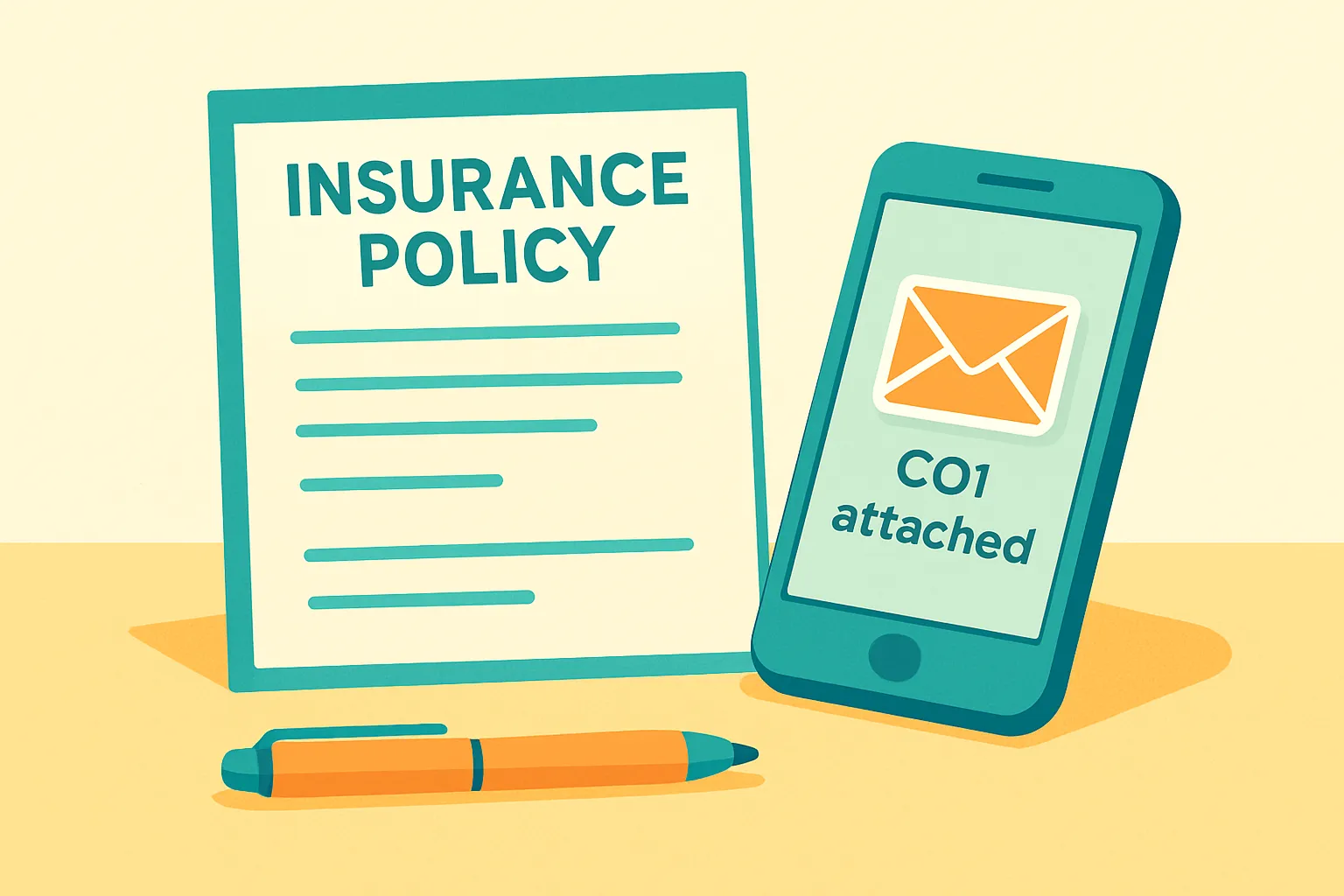
- Provide an ACORD 25 certificate that lists the certificate holder and the additional insureds, and be ready to provide policy endorsements (a certificate-only may be insufficient).
-
Submit proof promptly: NCDOT requires evidence of coverage before work begins and may require certificates be kept on file and updated within 10 business days after renewals or changes. If a sub hires on, update their COI before they work.
-
Keep the paperwork tidy: keep originals or certified electronic copies of policies and endorsements (some solicitations ask for certified policy copies and specific forms for railroad RPL). For long projects retain certain endorsements for years if required (some contracts ask for retroactive dates or maintenance of coverage for seven years for claims‑made policies).
Practical walkthroughs such as How to Get a Landscaper Certificate of Insurance and basics on Do Landscapers Need Commercial Auto Insurance? explain COI details and auto policy wording you’ll use with NCDOT. Also review Do Landscapers Need Workers' Comp Insurance? before you talk to an agent.
What affects cost and availability for NCDOT‑grade coverage?
NCDOT’s limits (especially $5M CGL) move a policy from "small business" to "commercial middle market" pricing tiers because of the higher limits and endorsements required. Factors underwriters and agents consider include: payroll and employees, payroll classification (landscaping has specific WC classes), fleet size and driving records, past claims and your Experience Rate Modifier (ERM), and whether you use subcontractors. NCDOT sometimes requires an ERM of 1.30 or less for vendors who must carry workers’ compensation. These underwriting inputs drive premiums; shop with an agent who understands contractor risk and NCDOT contract language.
If you want a ballpark premium discussion, use the site’s How Much Does Landscaper Insurance Cost a Year? for guidance — but for NCDOT work specifically, the required endorsements and limits will usually increase the price versus a small residential landscaper’s baseline. Do not rely on a quote until an insurer reviews your payroll, fleet details and contract language.
Common mistakes landscapers make when working with NCDOT — and how to avoid them?
- Sending an ACORD certificate but not an endorsement: a COI that lists the State as an "additional insured" without an actual policy endorsement won't meet NCDOT’s requirement. Always attach the policy endorsement or get the carrier to issue the correct additional insured endorsement.
- Assuming small size exempts you: NCDOT often requires workers’ comp proof even when you have fewer than three employees; don’t assume a small team can skip it.
- Missing the "any auto" requirement: using hired or borrowed vehicles without the correct commercial auto policy (Symbol 1/any auto) can leave you out of compliance and exposed.
- Not prequalifying or keeping prequal status current: NCDOT won’t open a bid if required prequalification steps aren’t complete. Renew and requalify on the timetable in the prequal portal.

Coverage comparison: what each required policy covers and when NCDOT will trigger it
| Coverage type | What it covers | Who needs it for NCDOT work? | Typical contract trigger |
|---|---|---|---|
| Commercial General Liability (CGL) | Bodily injury, property damage, completed operations, products, contractual liability | Any contractor or vendor doing work under NCDOT contracts or encroachments | Required by Standard Specifications; baseline $5,000,000 per occurrence / $5,000,000 aggregate (or as modified in solicitation). |
| Commercial Auto Liability | Liability for vehicles; "any auto" covers owned, hired, non‑owned | Contractors using trucks/tractors/mowers to perform work on NCDOT projects | Often required at $1,000,000 CSL or higher; ISO Symbol 1 endorsements common. |
| Workers’ Compensation & Employers’ Liability | Statutory WC benefits and employer’s liability | Any employer subject to NC statute or as required by NCDOT (NCDOT may require even small firms to show coverage) | Proof required before work starts; employers with three or more employees generally must carry WC under NC law. (ncdoi.gov) |
| Employers’ Liability | Protects employer from employee lawsuits outside WC | Employers required to carry WC | Often $1,000,000 per occurrence on NCDOT contracts. |
| Umbrella / Excess Liability | Adds limits above primary policies | Recommended if needed to reach contract limits (e.g., hit $5M) | Allowed to satisfy CGL limit when combined with primary liability. |
| Railroad Protective Liability (RPL) | Liability coverage that protects the railroad for on‑track work | Required only when work touches railroad ROW or requires ROE | RPL specs and submission procedures are in the ROE or contract; limits and forms strictly prescribed. |

Decision checklist: what to have before you bid or accept an NCDOT landscaping job
- Prequalification: NCID, NCDOT prequal application completed for the correct work code.
- Policies and endorsements: CGL policy and additional insured endorsement, commercial auto "any auto" endorsement if vehicles are used, workers’ comp policy or self‑insured certificate.
- ACORD certificate(s): list NCDOT as certificate holder; attach required endorsements or be ready to produce them on request.
- ERM and safety index: track your Experience Rate Modifier if you carry WC (some solicitations require ERM ≤ 1.30).
- Subcontractor COIs: get COIs and endorsements from any subcontractor before they start work.
Questions to ask your agent (exact wording to use)
- "Can you provide an additional‑insured endorsement naming 'State of North Carolina, NCDOT' that is at least as broad as ISO CG 20 10 11/85?"
- "Can my auto policy be endorsed to 'Any Auto' (ISO Symbol 1) and show $1,000,000 combined single limit on the ACORD?"
- "Will my workers’ compensation policy include a waiver of subrogation in favor of the State if the contract requires it?"
- "If the contract requires $5M CGL, can I combine a primary and an umbrella to meet that limit and will you provide the umbrella declarations to NCDOT?"
Frequently asked questions
Do these NCDOT requirements apply to residential landscapers who do a one‑off job next to state right‑of‑way?
If you’re doing work that touches the state right‑of‑way under any NCDOT permit, encroachment agreement or contract, the Department’s insurance and permit terms apply. For simple residential jobs fully off right‑of‑way, NCDOT contract rules won’t apply, but local cities/counties or your client might still ask for a COI. Check the encroachment/permit form before you begin.
Will an ACORD certificate alone satisfy NCDOT?
Not always. NCDOT routinely requires ACORD certificates plus specific endorsements (e.g., additional insured endorsements, waiver of subrogation, MCS‑90 or transportation pollution coverage when federal jurisdiction applies). If a solicitation asks for certified copies of policies or specific endorsements, you must provide them.
What if I subcontract to a smaller crew — who is responsible for their insurance?
The prime vendor is responsible for ensuring subcontractors meet the same insurance and prequal requirements. Collect COIs and appropriate endorsements from subs before they do any work and keep them on file.
Where can I check NCDOT prequalification and vendor rules?
NCDOT’s Prequalification pages explain how to register and stay prequalified (NCID, renewal, discipline/work codes) and are the place to start for anyone who wants to bid on NCDOT work.
Bottom line
If you plan to work for NCDOT as a landscaper — on a central let contract, a division let PO, or under an encroachment/ROE — get prequalified, line up commercial general liability (with the specified additional insured endorsement), an "any auto" commercial auto policy where vehicles are used, and workers’ compensation (or an accepted self‑insured certificate). Keep your ACORDs, endorsements and any required policy copies ready before work begins; NCDOT enforces these requirements strictly and may refuse to assign work until they’re on file. Start by pulling the solicitation’s Attachment D and the Standard Specifications and take them to your agent so the policies and endorsements match the contract language.
Further reading on this site: How to Get a Landscaper Certificate of Insurance, Do Landscapers Need Workers' Comp Insurance?, and Do Landscapers Need Commercial Auto Insurance? provide procedural detail about COIs, WC and auto coverage that will help when you put your NCDOT bid or permit package together.
Sources
- connect.ncdot.govconnect.ncdot.gov
- connect.ncdot.govconnect.ncdot.gov
- connect.ncdot.govconnect.ncdot.gov
- ncdoi.govncdoi.gov

Stephanie Mitchell has 20 years of experience researching and explaining business insurance topics for small business owners. About the author · Editorial standards