Table of contents
- Key takeaways
- What actually happens after a failed inspection?
- Does insurance cover the cost to fix failed work?
- Who pays to fix nonconforming work—contract, bond, or you?
- What are the typical money and schedule hits after a failure?
- Which policies and bonds help when an inspection fail creates bigger problems?
- How do state and city rules differ—and why does it matter?
- What would you do? A quick checklist for your next inspection
- Frequently asked questions
- Bottom line
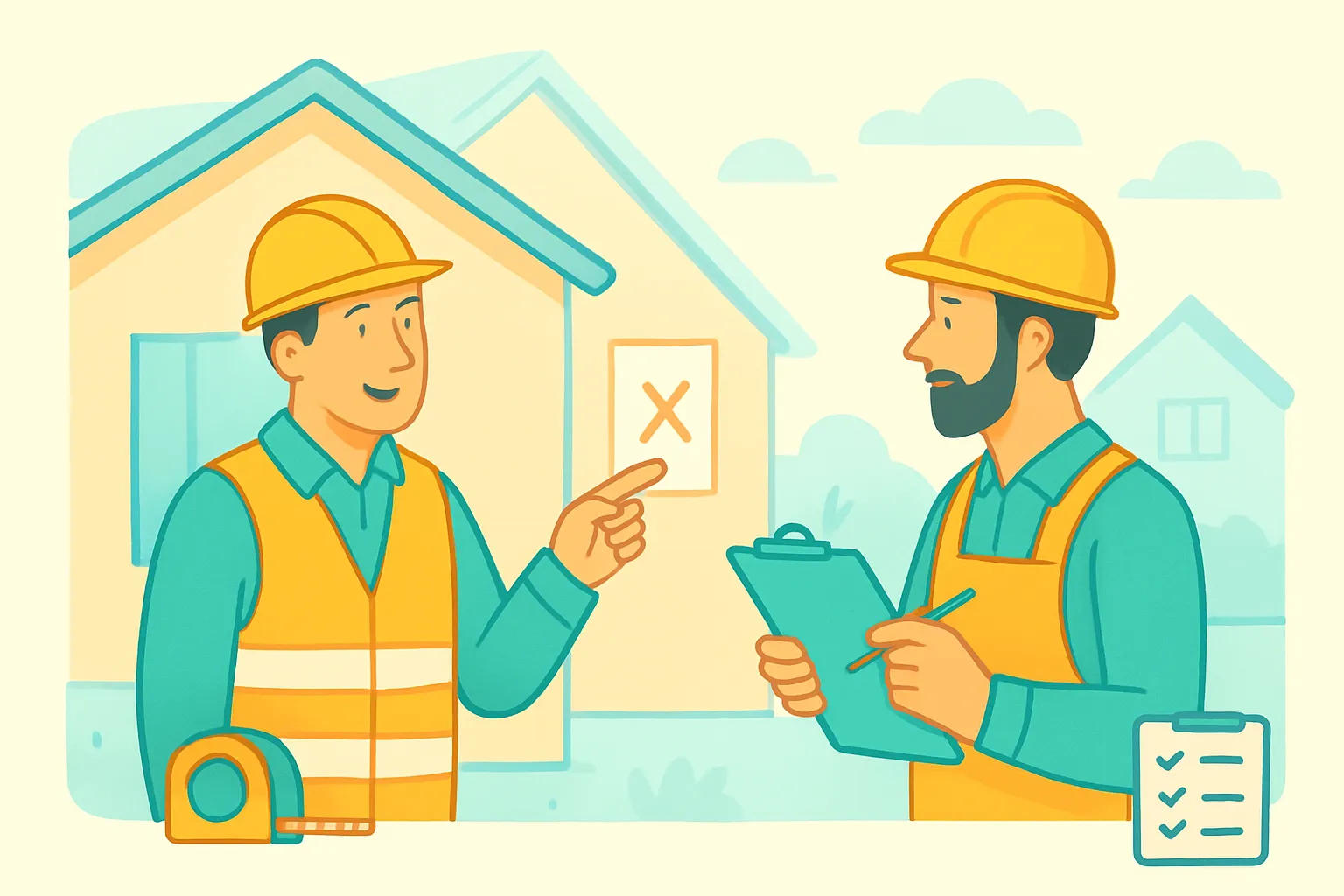
Say Miguel runs a small remodeling company. Midway through a kitchen job, the rough‑in inspection fails: the range circuit isn’t on a dedicated breaker and several GFCI outlets are missing. The inspector tags the job and says to fix it before closing the walls. Every lost day means a cranky client and extra cost.
Here’s the short version: when work fails inspection, you get a correction list and the inspector may limit or stop the affected work until you fix it and pass reinspection. You can be charged reinspection fees; serious cases can draw a stop‑work order with civil penalties. Insurance usually doesn’t pay to redo nonconforming work; it may respond only if your work causes covered damage or injury to others. Performance bonds on public or bonded jobs can be implicated if the work can’t be brought into compliance.
Key takeaways
- Expect a written correction list and a reinspection. Some cities charge reinspection fees each time prior corrections aren’t fixed; for example, Austin lists commercial reinspection fees per inspection as of 2026. (austintexas.gov)
- If conditions are unsafe or egregious, you may face a stop‑work order and civil penalties before work can resume; New York City lists $6,000 for a first violation and $12,000 for subsequent violations. (nyc.gov)
- General liability typically doesn’t pay to repair your faulty work (“your work” exclusion), but it can cover resulting damage to other property or people, depending on the policy and state law. (insurancejournal.com)
- Builders risk covers construction property against perils like fire or theft, not the cost to correct defective workmanship itself. (insurancejournal.com)
- On bonded jobs, the owner can make a performance bond claim to enforce contract completion if you don’t correct nonconforming work. (sba.gov)
What actually happens after a failed inspection?
- You’ll get a correction notice listing code or plan items that didn’t meet requirements, plus instructions to fix them and call for reinspection. Many jurisdictions assess a fee for each reinspection when past corrections aren’t addressed; as of October 2026, Austin’s commercial schedule shows a per‑inspection reinspection fee. Check your city’s fee schedule for the current amount.
- If the issue creates a safety risk or violates administrative rules, the authority can issue a partial or full stop‑work order. In New York City, work must cease until corrections are verified and penalties paid; violating an order can bring civil penalties (NYC cites $6,000 for a first violation and $12,000 for subsequent ones). Procedures vary by city, but the pattern—correct, request reinspection, pay any penalties, resume—is typical.
Practical example: Miguel’s electrician adds the dedicated circuit, installs code‑compliant GFCIs, takes photos, and schedules reinspection. If he’d covered the walls before correction, the official could require uncovering at the contractor’s expense before reinspection.
Tie this to your insurance and contract. The inspection timeline drives carry costs, sub scheduling, and, on commercial jobs, liquidated damages exposure if you miss contractual completion dates.

Does insurance cover the cost to fix failed work?
Usually no for the rework itself. Here’s how the main coverages respond.
-
Commercial general liability (CGL): A standard CGL is for third‑party injury or property damage, not making a contractor whole for redoing defective work. Industry guidance and case law describe the “your work” exclusion: your policy may cover resulting damage to other property but not the cost to rip out and redo your own nonconforming work. For a plain‑English overview, see the Insurance Journal explanation of the “your work” exclusion, and confirm specifics in your policy. Courts differ on details, but many have held that while faulty workmanship itself isn’t covered, resulting damage can be—especially where a subcontractor’s work triggers the policy’s subcontractor exception. A leading example is Florida’s J.S.U.B. decision, which found coverage for resulting damage within the policy’s terms. Your outcome depends on your state and policy language. (caselaw.findlaw.com)
-
Builders risk: This covers project property against causes like fire, theft, vandalism, and some weather—typically not the cost to correct defective design or workmanship itself. Builders risk may pay for the ensuing covered damage (e.g., a covered peril that follows the defect), but not the defect fix.
-
Contractors professional liability/E&O: If an error in professional services (design‑build, construction management, layout, means and methods advice) leads to rework or downstream loss, contractors E&O may respond for negligence in those services. Definitions vary, but the NAIC describes E&O as coverage for losses from errors or omissions in the performance of services; many modern policies can include “mitigation” or “rectification” costs discovered during construction, subject to terms. (content.naic.org)
-
General liability—what it does cover: If Miguel’s wiring error caused a fire that damaged the owner’s existing cabinets, the CGL could respond to that resulting property damage claim, within policy limits and subject to exclusions. For a foundational overview of what CGL is built to cover, see the Insurance Information Institute’s guide. (iii.org)
For deeper background on how these policies differ on job sites, see Builders Risk vs. General Liability for contractors. Builders Risk vs General Liability: Contractors
Who pays to fix nonconforming work—contract, bond, or you?
Most construction contracts require the contractor to correct nonconforming work at the contractor’s expense and without delay. Trade‑association guidance built around common forms (AIA/ConsensusDocs) reflects this: the constructor must correct rejected work, and, if uncovering or re‑inspection is needed due to defective work, those costs fall on the contractor. Owners may also be allowed to correct work and back‑charge if the contractor doesn’t proceed promptly. (agc.org)
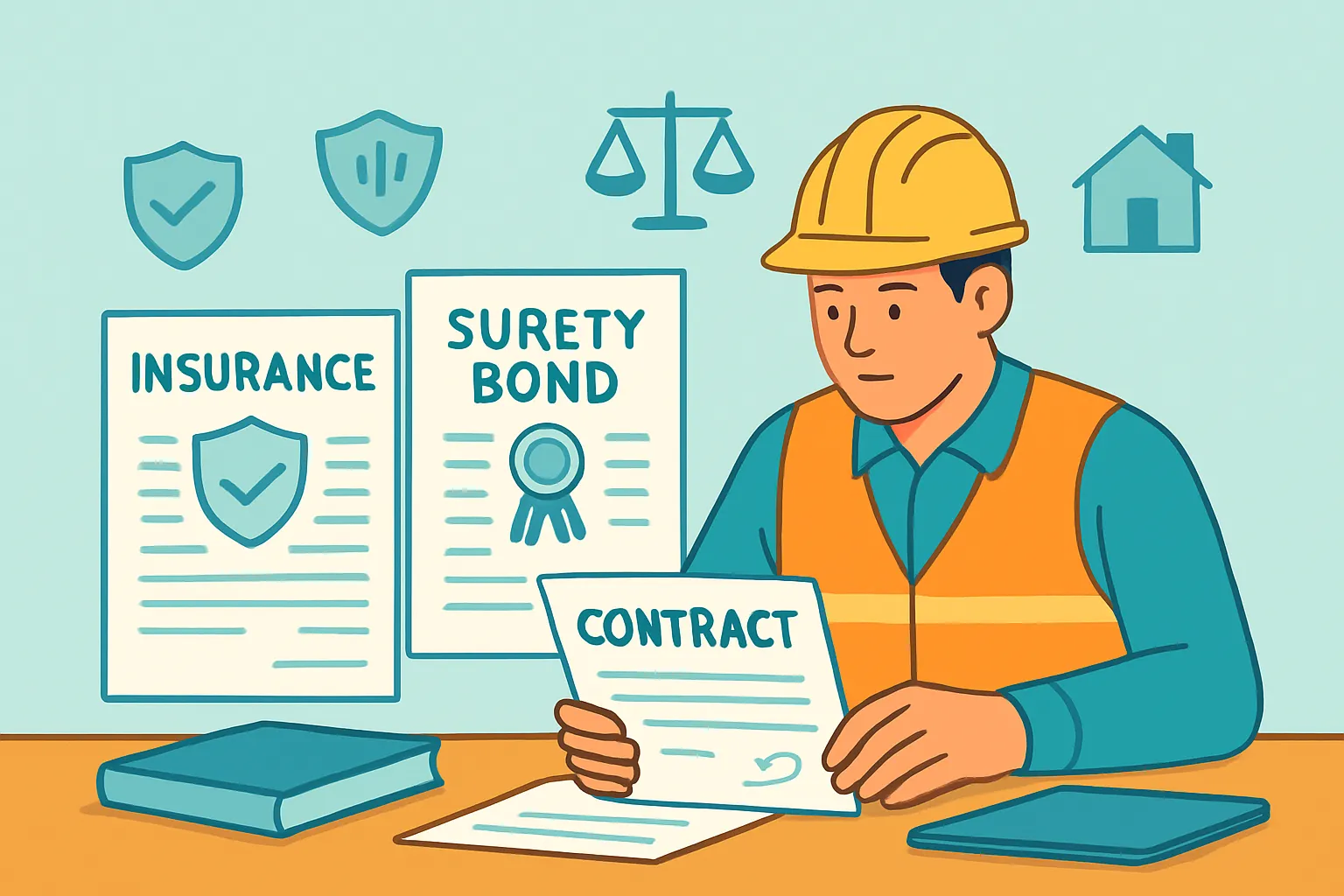
On jobs that require a performance bond, the owner can make a claim if the contractor can’t or won’t complete per the contract. The U.S. Small Business Administration explains that performance bonds “ensure full completion of a contract,” and it guarantees certain small‑business bonds through its Surety Bond Guarantee program. Bonds don’t replace your obligation to fix work; they enforce it and add a surety’s oversight if needed.
If you’re using subs, your subcontract and certificates matter. Require subs to carry their own liability and, where relevant, professional liability, name you as additional insured where appropriate, and flow down correction‑of‑work duties. If a sub’s mistake caused the fail, contractual risk transfer and the CGL subcontractor exception can be crucial in determining who ultimately pays.
For more on subcontractor protections, read: Do Subcontractors Need Their Own Insurance
What are the typical money and schedule hits after a failure?
- Reinspection fees: Many cities impose a fee when previous corrections aren’t completed. Austin’s commercial schedule lists a per‑inspection reinspection fee as of October 2026; amounts and triggers vary by trade and jurisdiction. Budget a contingency line for these fees on larger jobs.
- Stop‑work penalties: If a stop‑work order is issued and you violate it, expect civil penalties and delays before the order is lifted. NYC cites $6,000 for a first violation and $12,000 for subsequent ones, payable before the order is rescinded. Plan for potential idle time and rescheduling ripple effects.
- Idle‑cost exposure: Extended delays can trigger owner claims (e.g., liquidated damages) or sub claims for standby. Your contract governs who eats which costs. Track delay days tied to inspections and pursue change orders only where the contract allows.
To keep insurance and claims headaches down, bookmark this guide: What to Do After a Contractor Liability Claim
Which policies and bonds help when an inspection fail creates bigger problems?
Here’s how common protections do—and don’t—help when work fails inspection.
| Protection | What it covers in plain English | Helps with failed inspection? | Typical trigger |
|---|---|---|---|
| General liability (CGL) | Bodily injury and third‑party property damage caused by your operations | Not to redo your faulty work; may cover resulting damage to other property, depending on policy/state | An “occurrence” that injures someone or damages non‑defective property; exclusions apply. |
| Builders risk | Property coverage for the project during construction (fire, theft, some weather) | No, not for fixing defective workmanship; may cover ensuing covered loss | Physical loss from a covered peril to insured project property. |
| Contractors professional liability/E&O | Negligence in professional services (e.g., design‑build advice, layout, CM) | Sometimes; some forms include “mitigation/rectification” costs during construction | A claim (or circumstance, depending on form) alleging negligent professional services. |
| Performance bond | Enforces contract completion; surety steps in if the contractor defaults | Indirectly; owner can claim if you won’t correct and complete | Failure to perform per contract terms. |
If you drive materials or crews, make sure your vehicles are properly insured, too: Commercial Auto Insurance for Contractor Pickup
How do state and city rules differ—and why does it matter?
- Inspection and reinspection rules sit with your local building department or fire marshal. One city may include one free reinspection, while another charges each time prior corrections aren’t resolved. Austin publishes per‑inspection reinspection fees on commercial permits; your city’s amounts and triggers will differ.
- Enforcement tools also differ. NYC, for instance, outlines how to lift a stop‑work order and specifies civil penalties for violations. Other cities post different steps, forms, and penalty amounts, but the general sequence—correct, re‑inspect, pay penalties, then resume—remains consistent.
Planning public work in Texas? Review insurance expectations and state nuances before you bid: Contractor Insurance Requirements in Texas
What would you do? A quick checklist for your next inspection
- Before the inspection
- Walk the site with approved plans and the latest correction list. Photograph fixes.
- Confirm subs’ work against likely fail points (GFCI/AFCI, firestopping, anchorage, penetrations).
- Stage access: ladders, lighting, panels open, permits posted.
- If you fail
- Ask the inspector to clarify each deficiency and acceptable fix. Confirm if partial work can continue.
- Log the fail, the code section, who will fix it, and by when. Track costs tied to the fail (hours, materials, reinspection fees).
- Decide: correct in‑house or back‑charge a sub under your subcontract.
- Questions to ask your agent/broker
- How does my CGL treat “your work” and the subcontractor exception? Any endorsements that narrow coverage?
- Do I carry contractors professional liability/E&O, and does it include mitigation/rectification or “work at risk” coverage during construction?
- What does my builders risk policy say about defective workmanship and ensuing loss?
- Are owners or GCs requiring specific additional insured and waiver endorsements that affect claims tied to inspection issues?
- Contract and bonding
- Where does my contract put the cost of uncovering, retesting, and reinspection when work is defective?
- Is this job bonded? What are my notice, cure, and default provisions before a bond claim can be made?
For help pricing core protections before you bid, see: How Much Does General Contractor Insurance Cost and Equipment and Tools Insurance for Contractors
Frequently asked questions
Will I automatically get fined if I fail an inspection?
Usually not. You’ll receive a correction list and instructions for reinspection. Fines and civil penalties tend to come with stop‑work orders or repeated/unsafe violations. NYC’s building department details steps to correct and lift an SWO, including paying listed penalties. Your city’s amounts and process will differ.
Do reinspection fees add up every time?
They can. Many jurisdictions assess a fee for each reinspection when prior corrections aren’t fixed or the site isn’t ready. Austin’s fee schedule shows per‑inspection reinspection charges on commercial permits as of October 2026. Check your local schedule for the current rates.
Can my client refuse to pay after a failed inspection?
Payment rights flow from your contract and state law. Most agreements require you to correct nonconforming work promptly at your cost; if you don’t, owners can often arrange correction and back‑charge. On bonded work, owners may look to the performance bond to enforce completion.
Will my general liability cover reinspection fees or rework?
Generally no. CGL is built to cover bodily injury and third‑party property damage—not the cost to repair or reinspect your own faulty work. Resulting damage to other property may be covered depending on your policy and state decisions interpreting the “your work” exclusion.
What if the failure was my subcontractor’s fault?
Your contract with the sub controls who pays to correct. Insurance‑wise, the CGL’s subcontractor exception can matter for resulting damage claims, and making subs carry their own coverage and add you as an additional insured can help align responsibility.
Bottom line
Failed inspections are fix‑and‑prove moments: correct the work, document it, and pass reinspection. Budget for possible fees and build time for a retest. Don’t expect your insurance to fund rework—CGL is for third‑party damage, builders risk is for covered perils, and E&O is for professional negligence. Keep your contracts tight, your subs insured, and your bond terms clear so a stumble doesn’t become a standstill.
Sources
- nyc.govnyc.gov
- insurancejournal.cominsurancejournal.com
- insurancejournal.cominsurancejournal.com
- sba.govsba.gov
- caselaw.findlaw.comcaselaw.findlaw.com
- content.naic.orgcontent.naic.org
- iii.orgiii.org
- agc.orgagc.org

Stephanie Mitchell has 20 years of experience researching and explaining business insurance topics for small business owners. About the author · Editorial standards